Who was Rani Lakshmibai, and what is this comic about?

Rani Lakshmibai (c. 1828–1858), queen of Jhansi, became one of the central figures of the Indian Rebellion of 1857–58. Britannica identifies her as a ruler who organized troops, fought dressed for battle, and died near Gwalior in June 1858. The National Army Museum confirms the political hinge: British annexation of Jhansi, the 1858 siege and capture of the city, and her death in battle near Gwalior. HistoryExtra likewise frames her stand after her husband’s death and the British rejection of her adopted son’s succession, ending at Kotah-ki-Serai on 17 June 1858. Her worth is not that she won a campaign. It is that legal dispossession, grief, military command, and death fused into a symbol strong enough to outlive the empire that tried to file her kingdom away, inspiring later generations to picture freedom as mounted, armed, and unafraid.

Sources
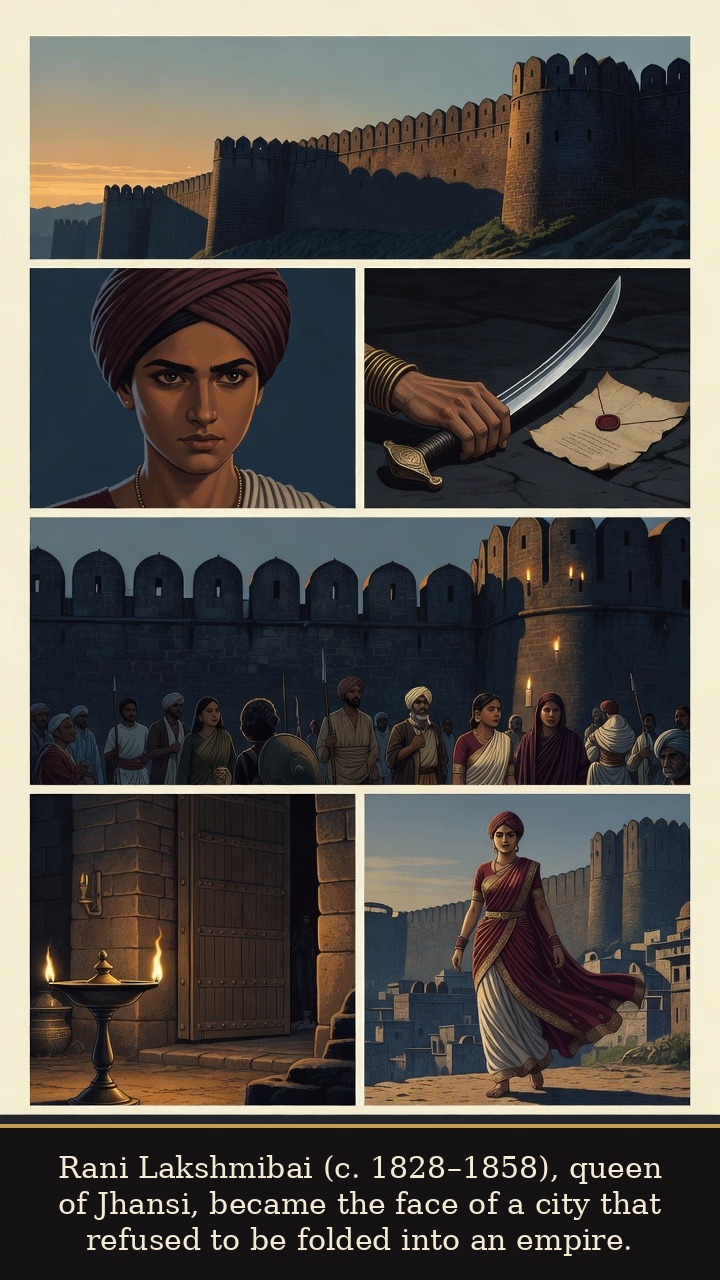
Page 1 of Rani Lakshmibai: Rani Lakshmibai: Jhansi Flame - Rani Lakshmibai (c. 1828–1858), queen of Jhansi, became the face of a city that refused to be folded into an empire.
Rani Lakshmibai (c. 1828–1858), queen of Jhansi, became the face of a city that refused to be folded into an empire.
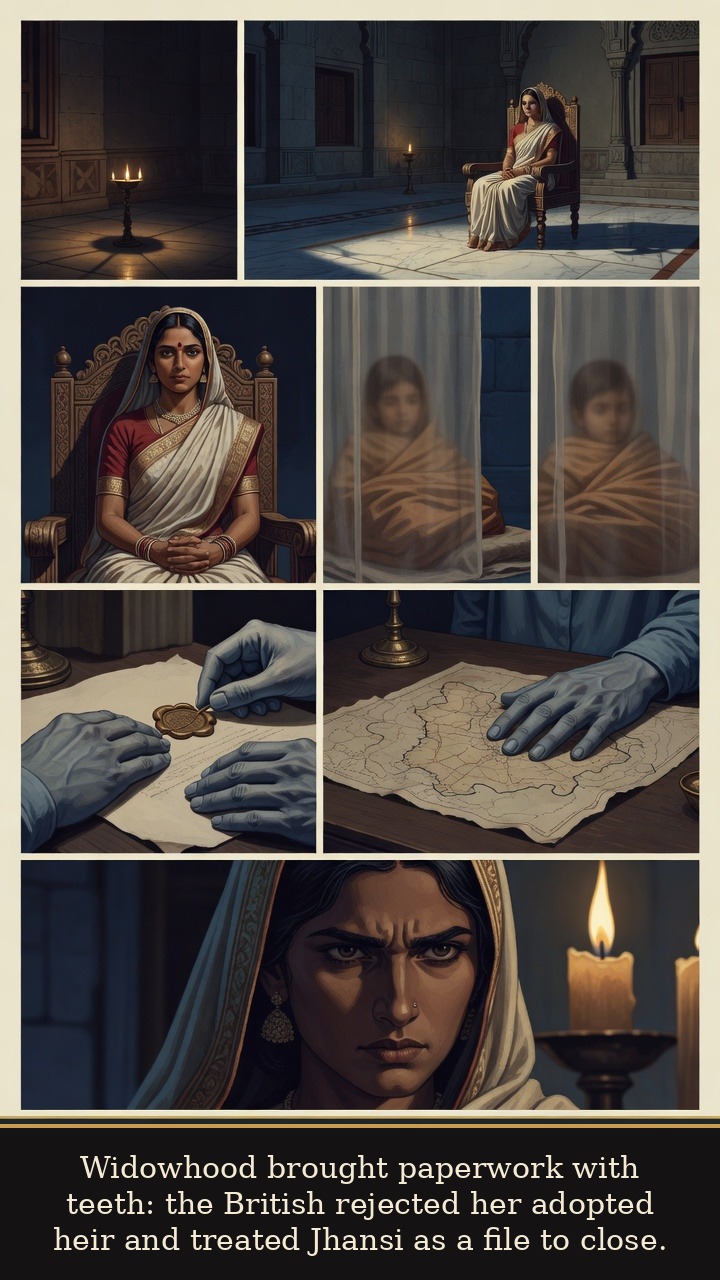
Page 2 of Rani Lakshmibai: Rani Lakshmibai: Jhansi Flame - Widowhood brought paperwork with teeth: the British rejected her adopted heir and treated Jhansi as a file to close.
Widowhood brought paperwork with teeth: the British rejected her adopted heir and treated Jhansi as a file to close.
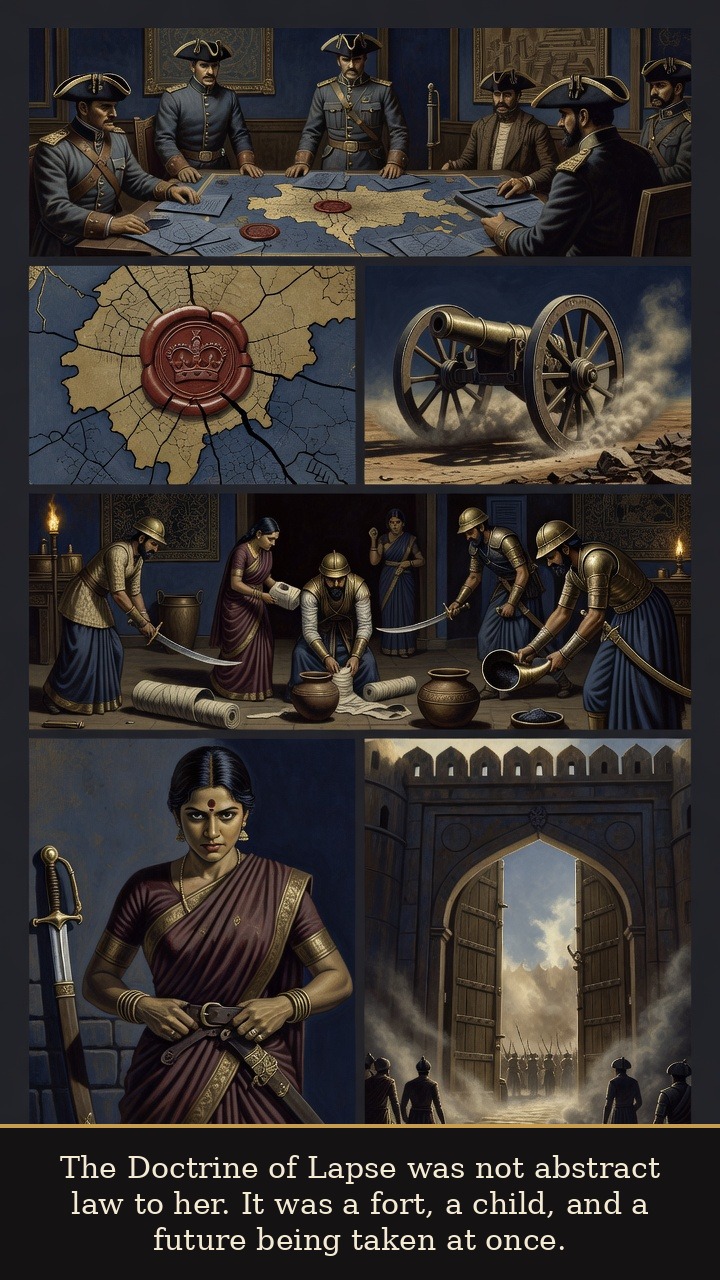
Page 3 of Rani Lakshmibai: Rani Lakshmibai: Jhansi Flame - The Doctrine of Lapse was not abstract law to her. It was a fort, a child, and a future being taken at once.
The Doctrine of Lapse was not abstract law to her. It was a fort, a child, and a future being taken at once.
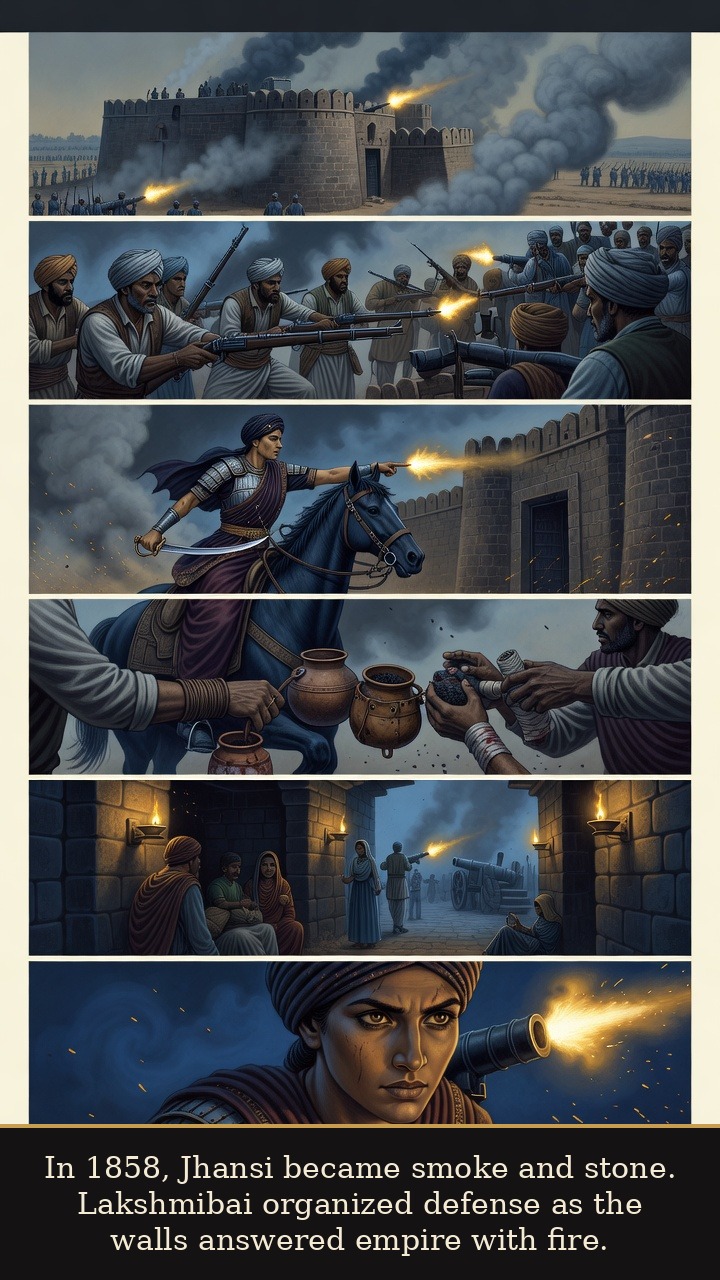
Page 4 of Rani Lakshmibai: Rani Lakshmibai: Jhansi Flame - In 1858, Jhansi became smoke and stone. Lakshmibai organized defense as the walls answered empire with fire.
In 1858, Jhansi became smoke and stone. Lakshmibai organized defense as the walls answered empire with fire.
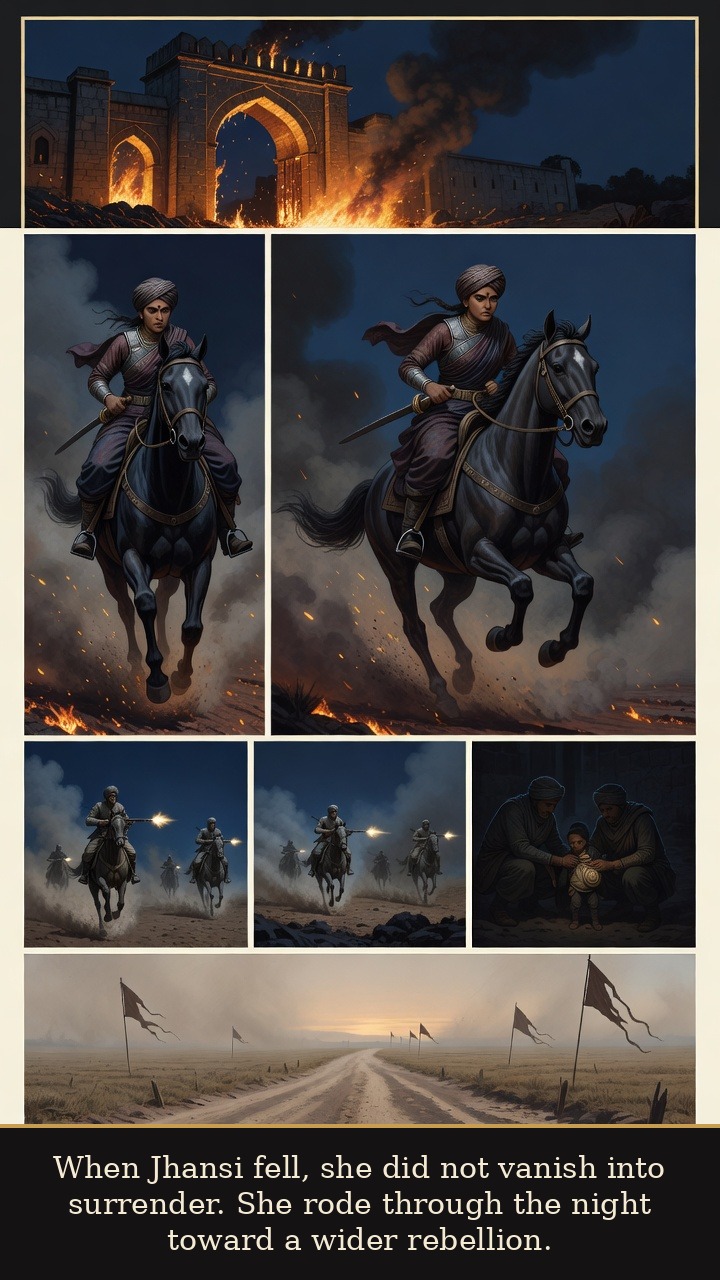
Page 5 of Rani Lakshmibai: Rani Lakshmibai: Jhansi Flame - When Jhansi fell, she did not vanish into surrender. She rode through the night toward a wider rebellion.
When Jhansi fell, she did not vanish into surrender. She rode through the night toward a wider rebellion.
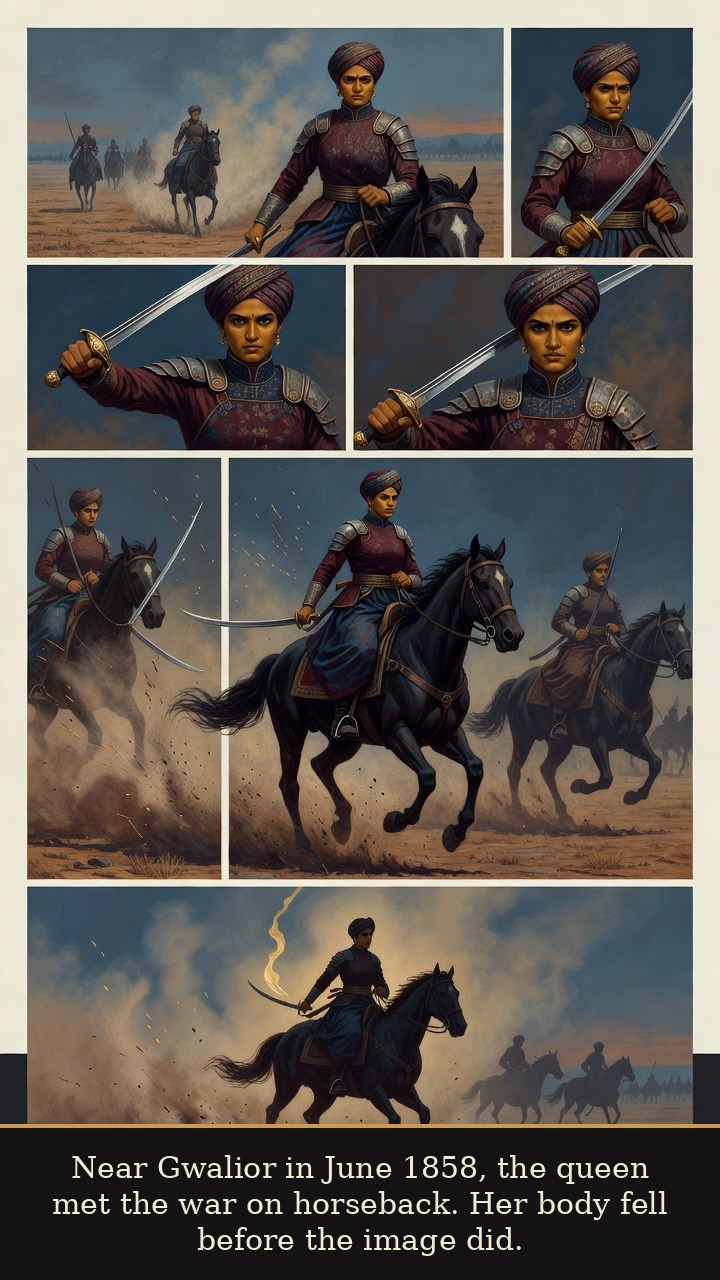
Page 6 of Rani Lakshmibai: Rani Lakshmibai: Jhansi Flame - Near Gwalior in June 1858, the queen met the war on horseback. Her body fell before the image did.
Near Gwalior in June 1858, the queen met the war on horseback. Her body fell before the image did.
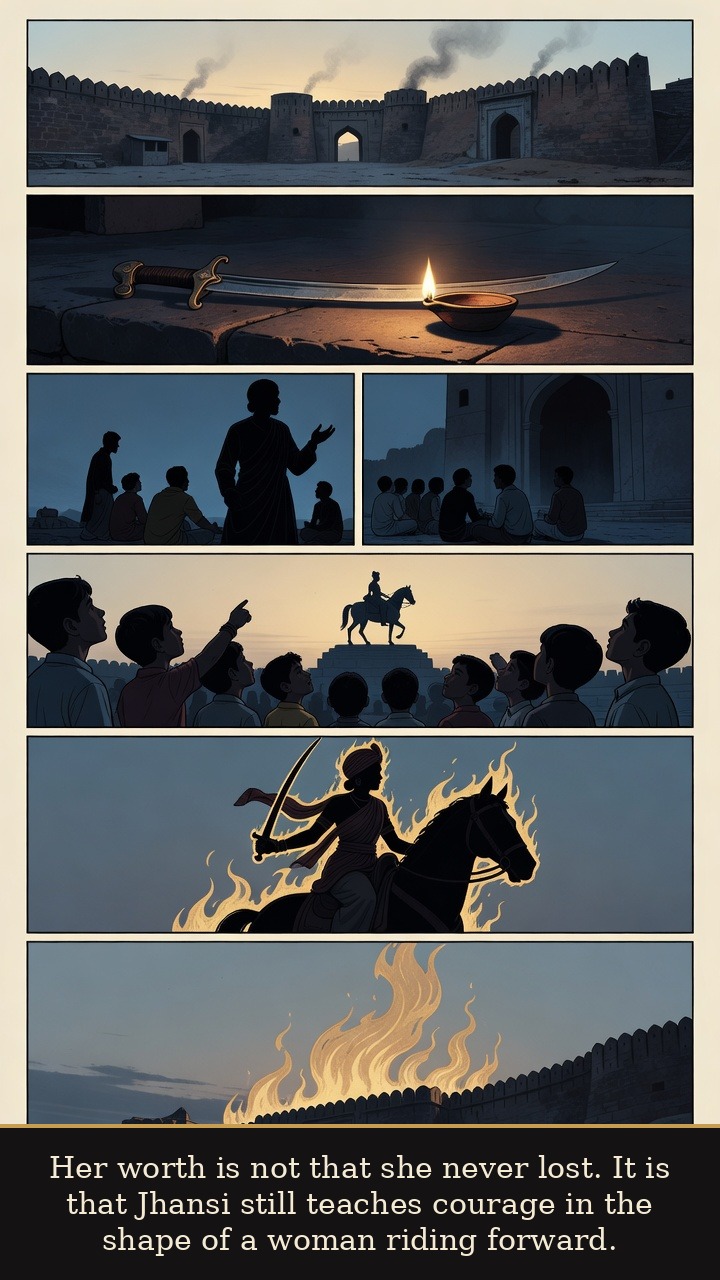
Page 7 of Rani Lakshmibai: Rani Lakshmibai: Jhansi Flame - Her worth is not that she never lost. It is that Jhansi still teaches courage in the shape of a woman riding forward.
Her worth is not that she never lost. It is that Jhansi still teaches courage in the shape of a woman riding forward.