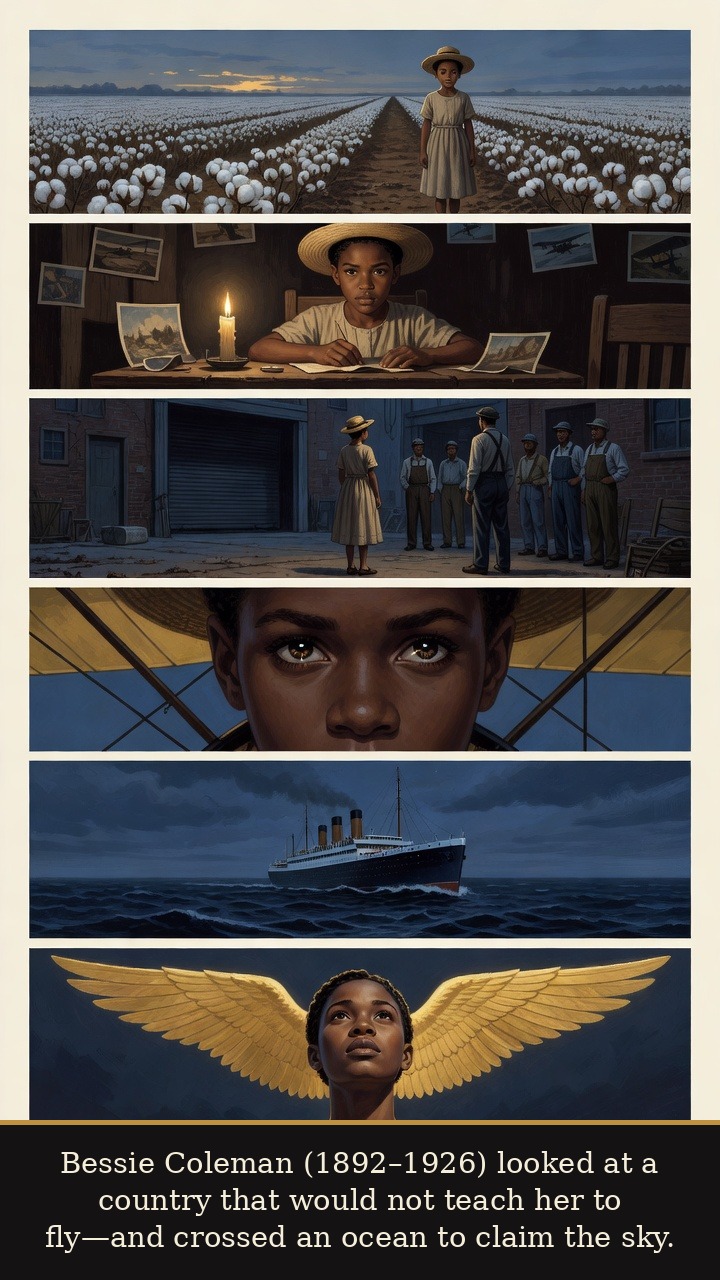
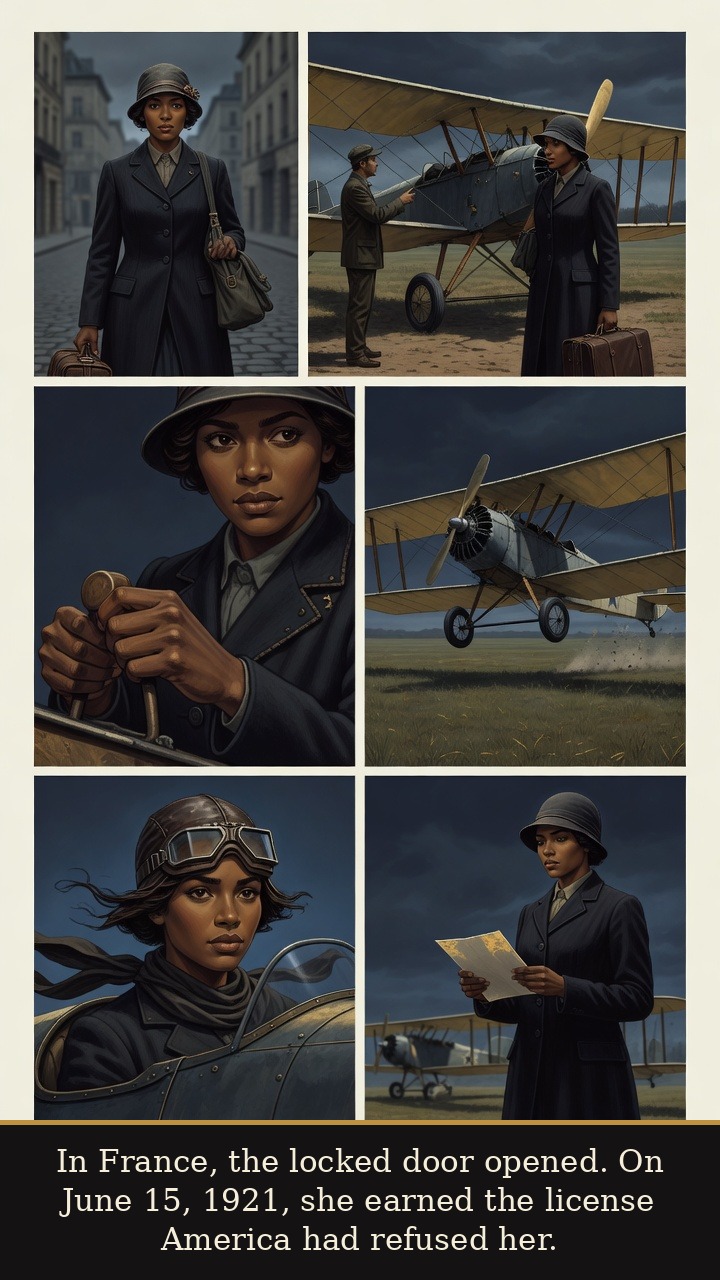
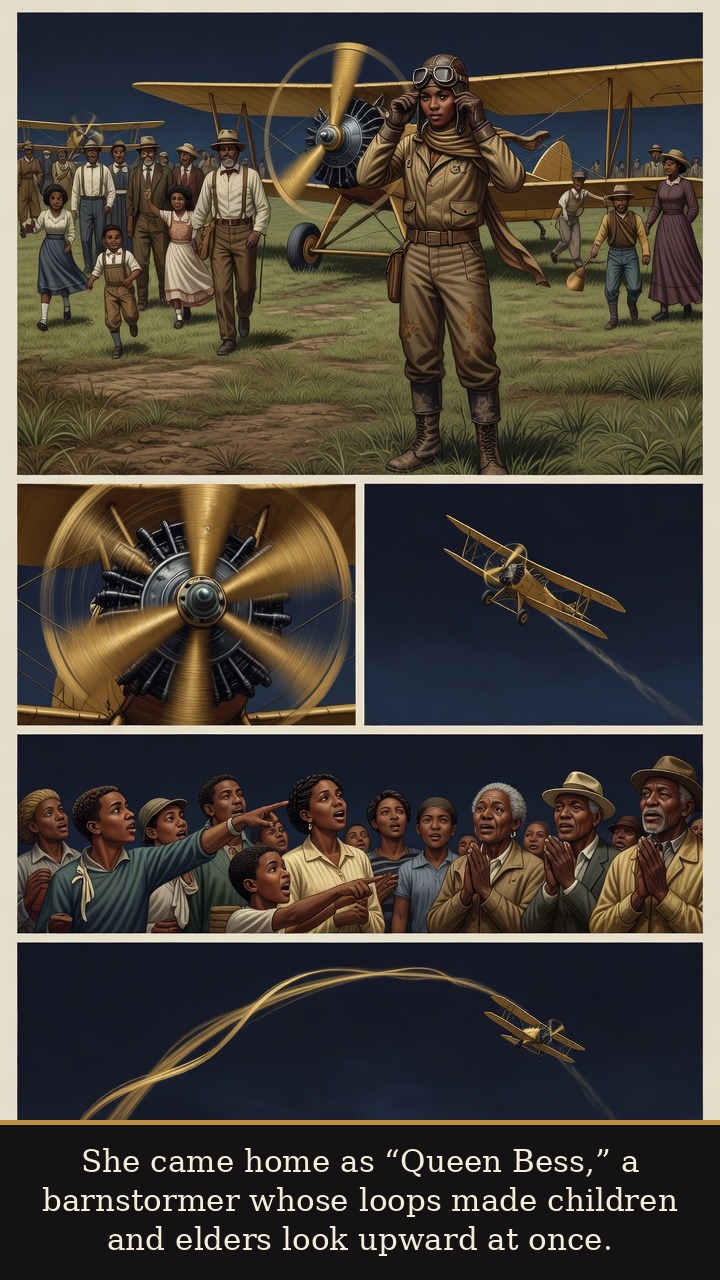
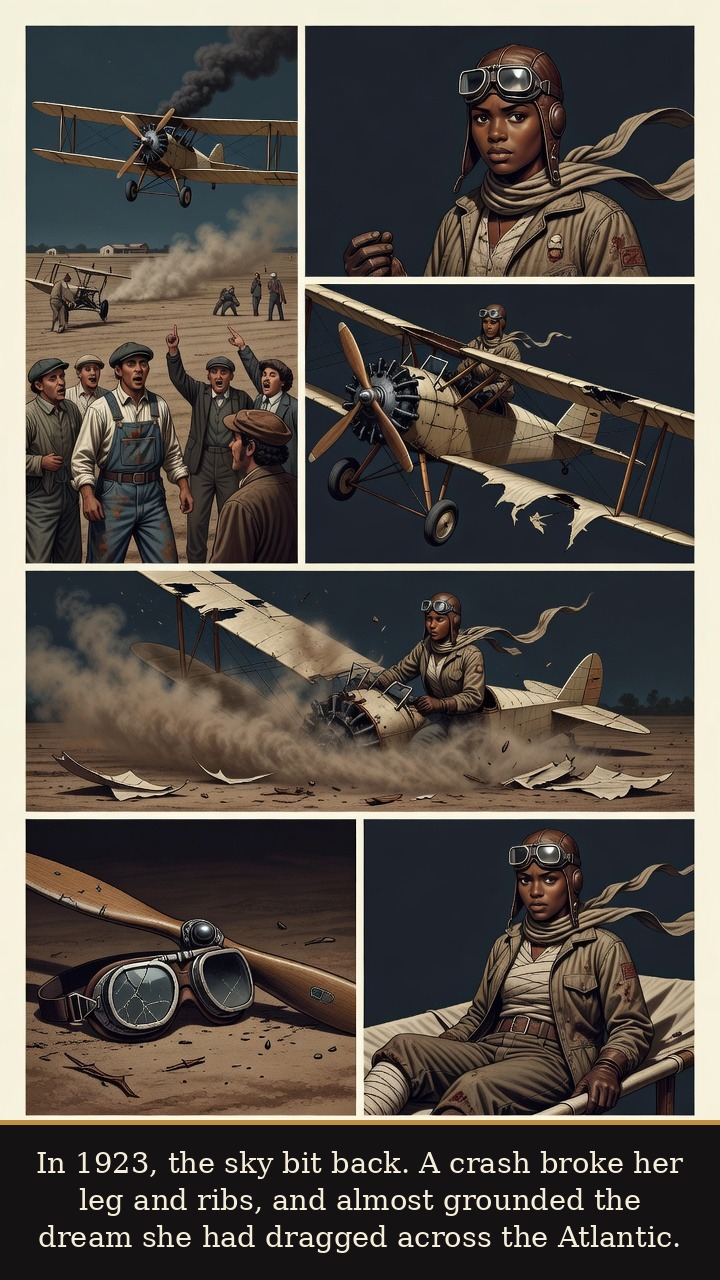
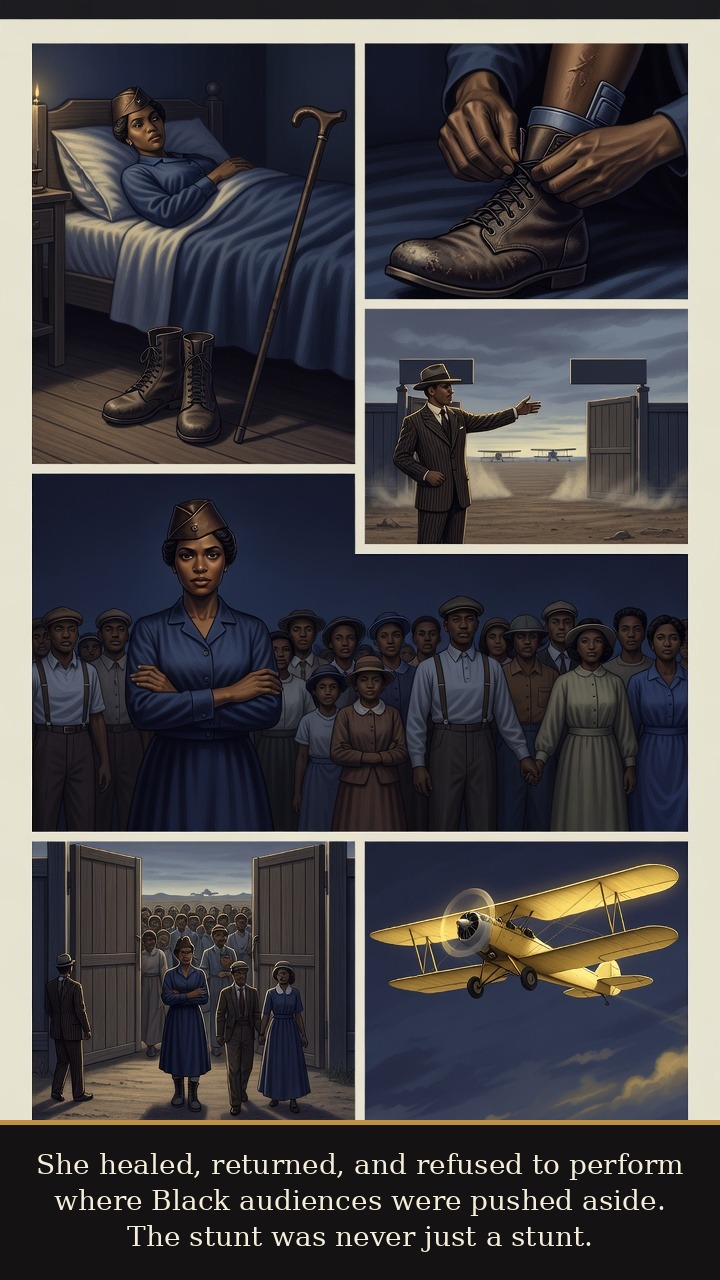
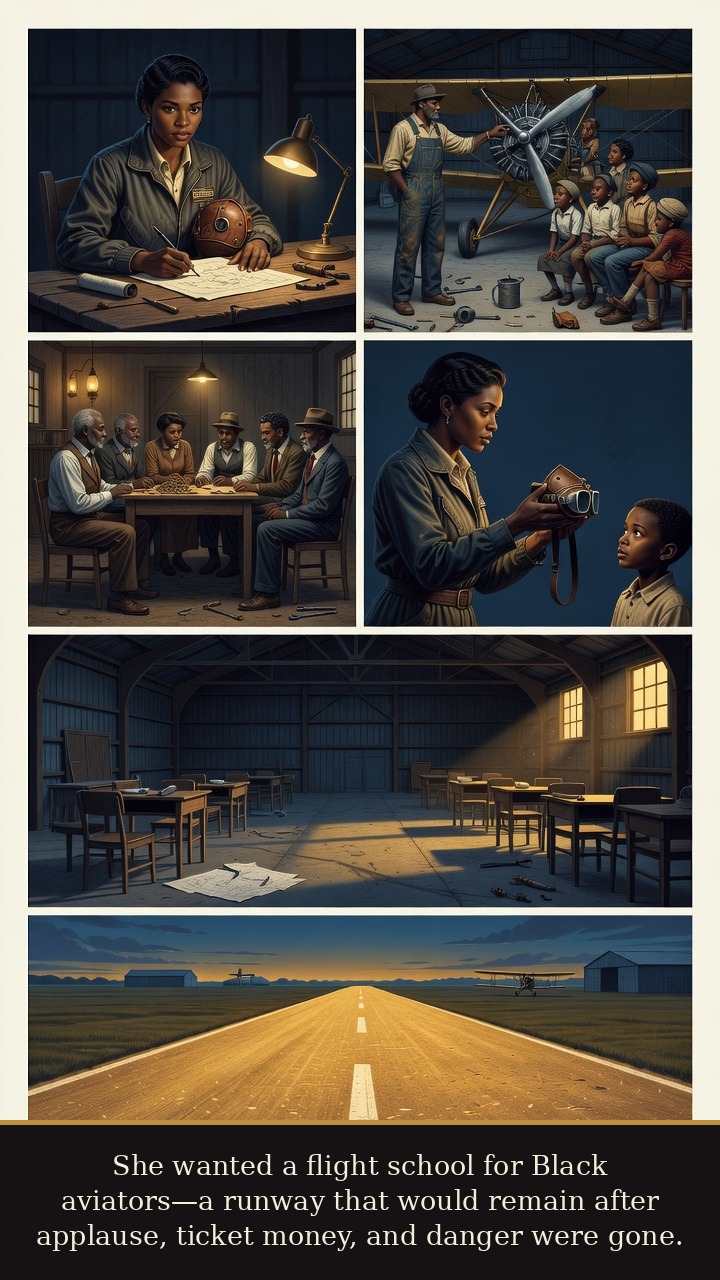
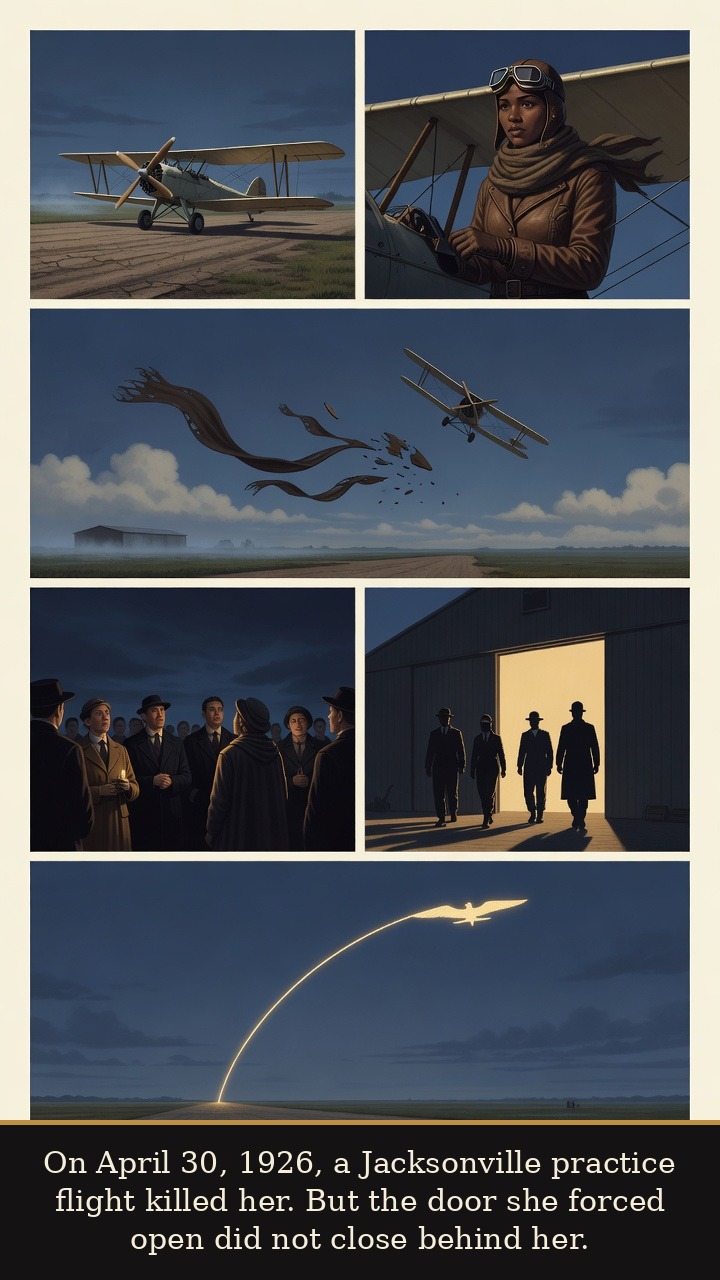
Bessie Coleman (1892–1926) became the first African American woman to earn an international pilot’s license after American flight schools rejected her because of race and gender. Britannica identifies her as a pioneering aviator who trained in France, barnstormed in the United States, refused segregated audiences, raised funds for a Black aviators’ school, and died in a 1926 Jacksonville rehearsal crash. The Smithsonian National Air and Space Museum confirms her June 15, 1921 license, her airshow career, her flight-school ambition, and her death on April 30, 1926 after being thrown from a biplane during a practice flight. The National Women’s History Museum confirms her license, stunt-pilot career, first public flight by a Black woman, and fatal rehearsal crash. Smithsonian Magazine adds the mortality hinge: in 1923 Coleman crashed in California, broke a leg and ribs, recovered, and returned to performing. Her worth is not only that she was first; it is that she turned a denied sky into a public door for those told not to look up.