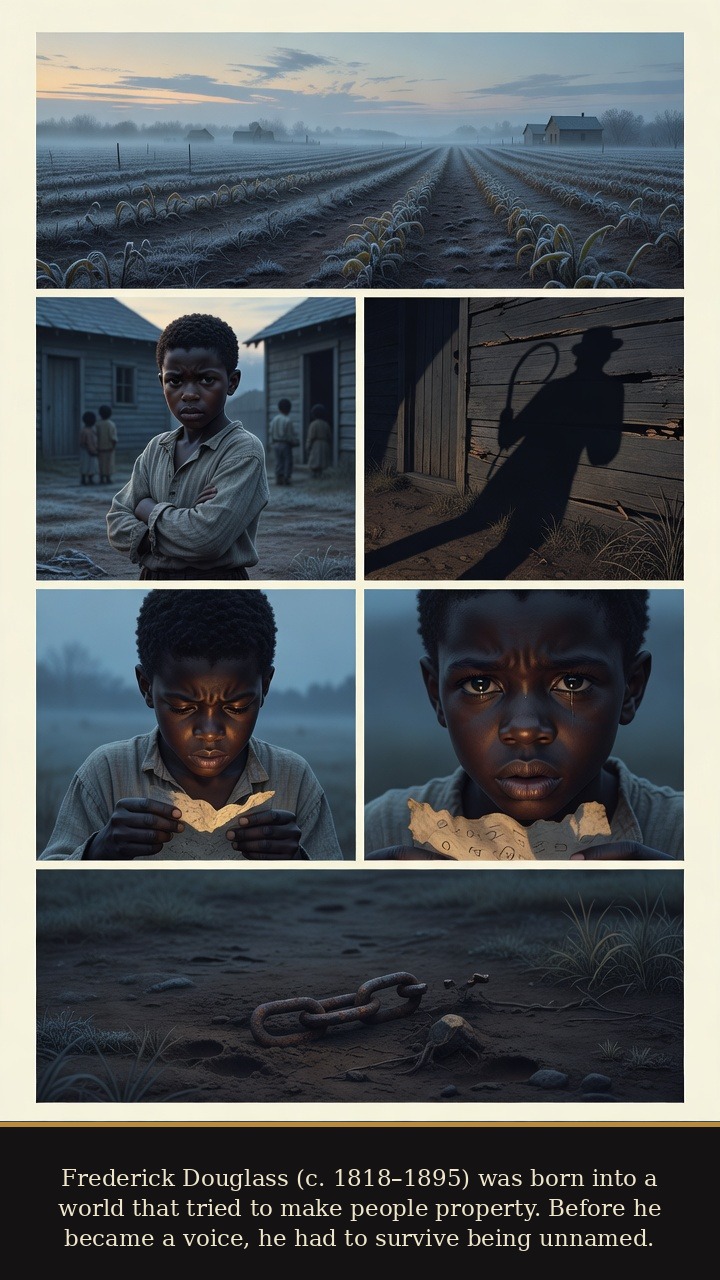

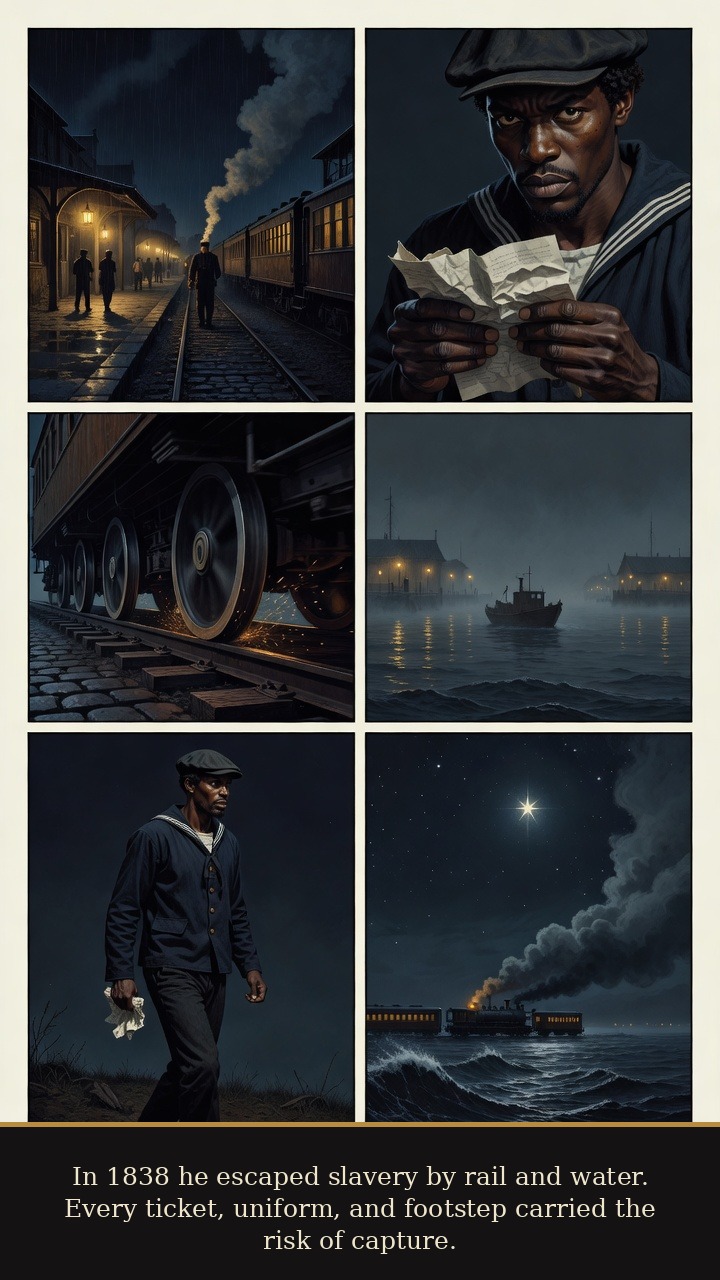


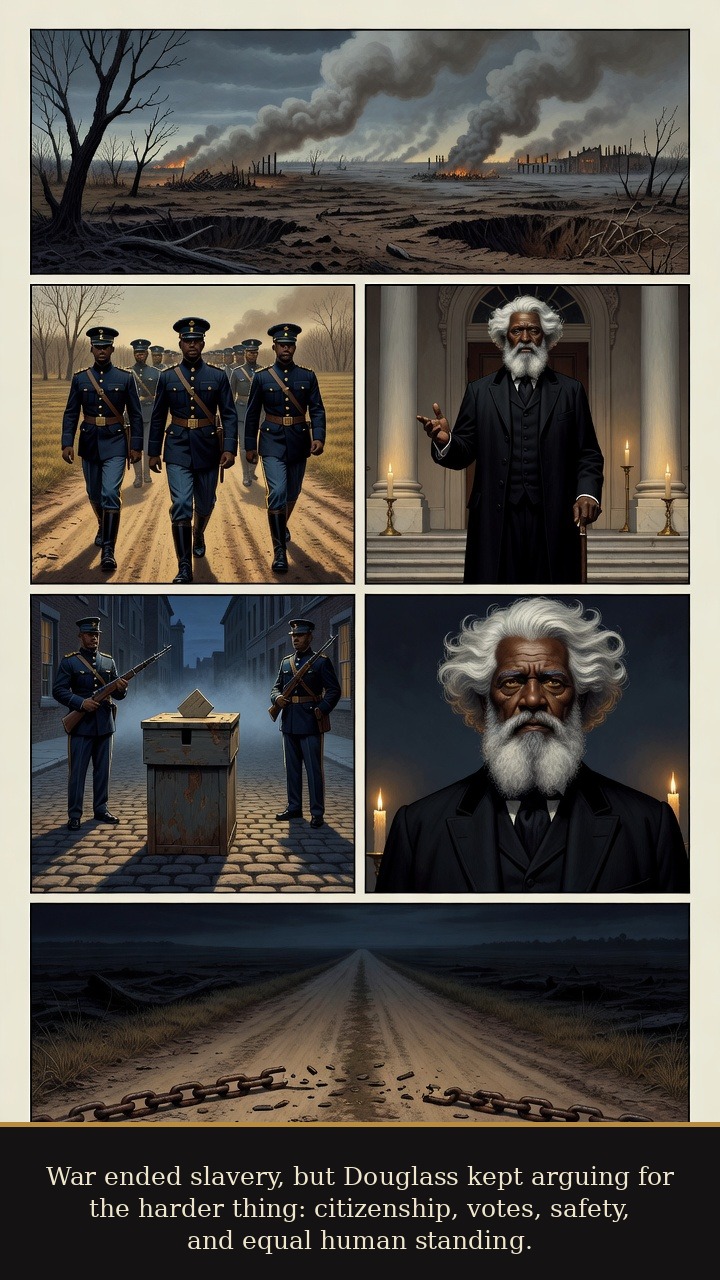
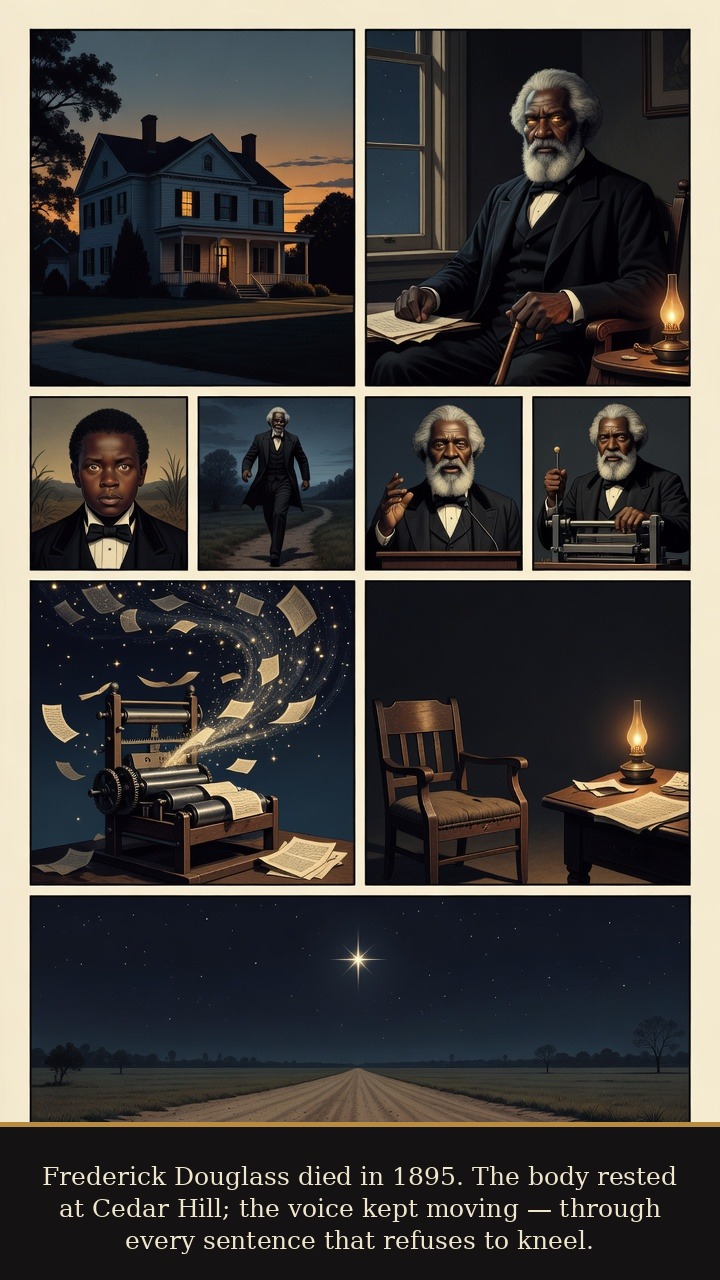
Frederick Douglass (c. 1818–1895) was born enslaved in Maryland and escaped bondage in 1838. Encyclopaedia Britannica identifies him as an African American abolitionist, orator, newspaper publisher, and author, and confirms his death on February 20, 1895, in Washington, D.C. The National Park Service records that after escaping slavery in Maryland, he became a national leader of the abolitionist movement and died at Cedar Hill. The Library of Congress describes the Frederick Douglass Papers as documenting an escaped slave who became a leading voice for emancipation and civil rights through writings and speeches. His worth is not simply that he survived slavery. It is that he converted survival into public evidence: the 1845 Narrative, lectures, journalism, and statesmanship that forced a nation to hear the person slavery had tried to erase, and to answer him in history.