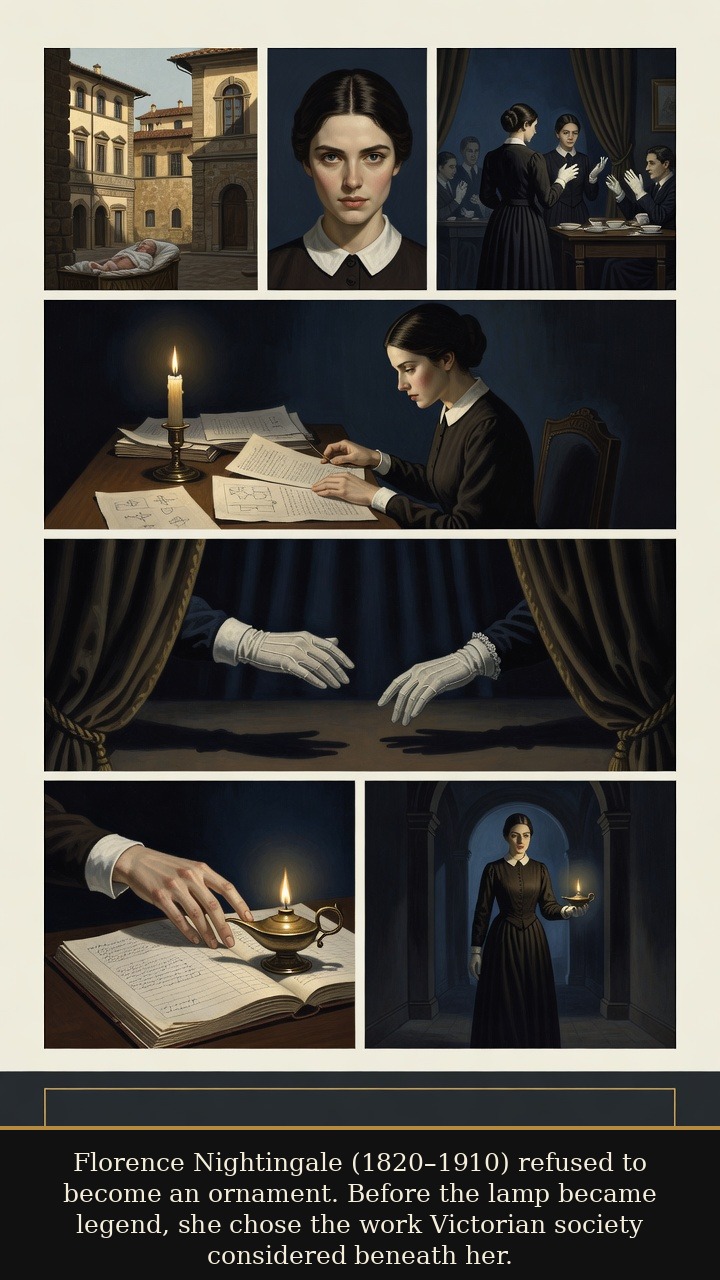
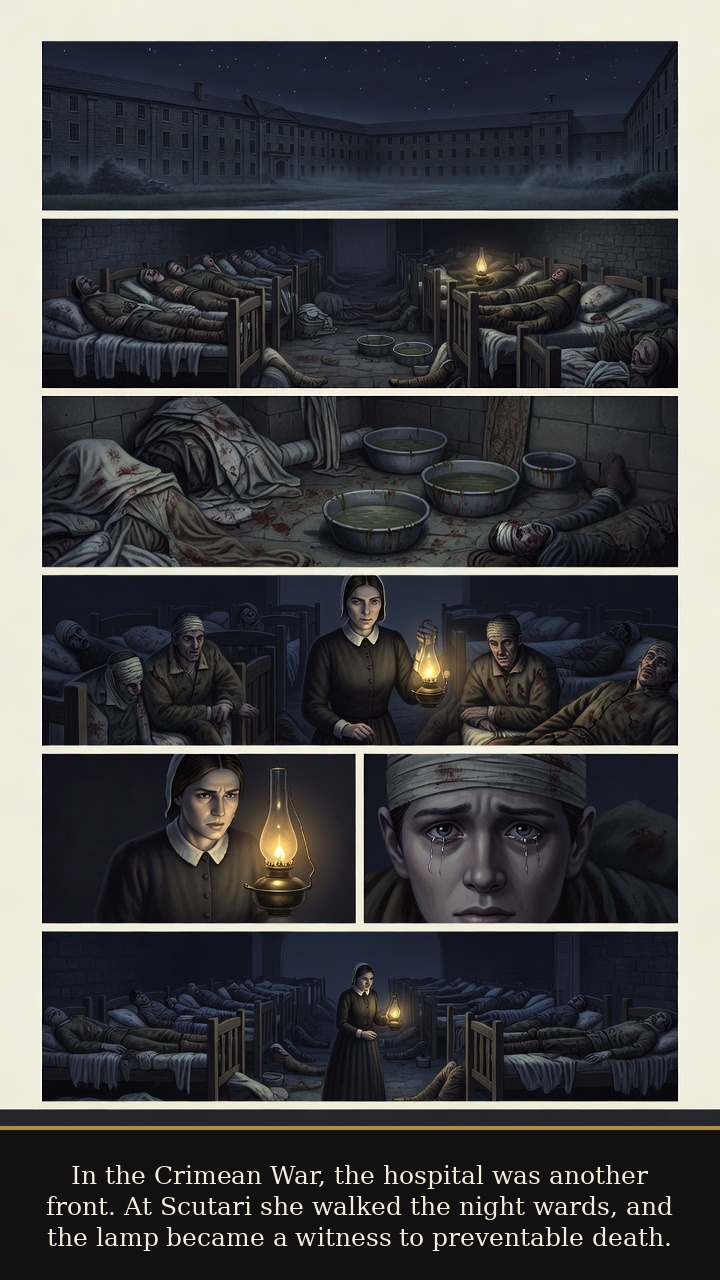
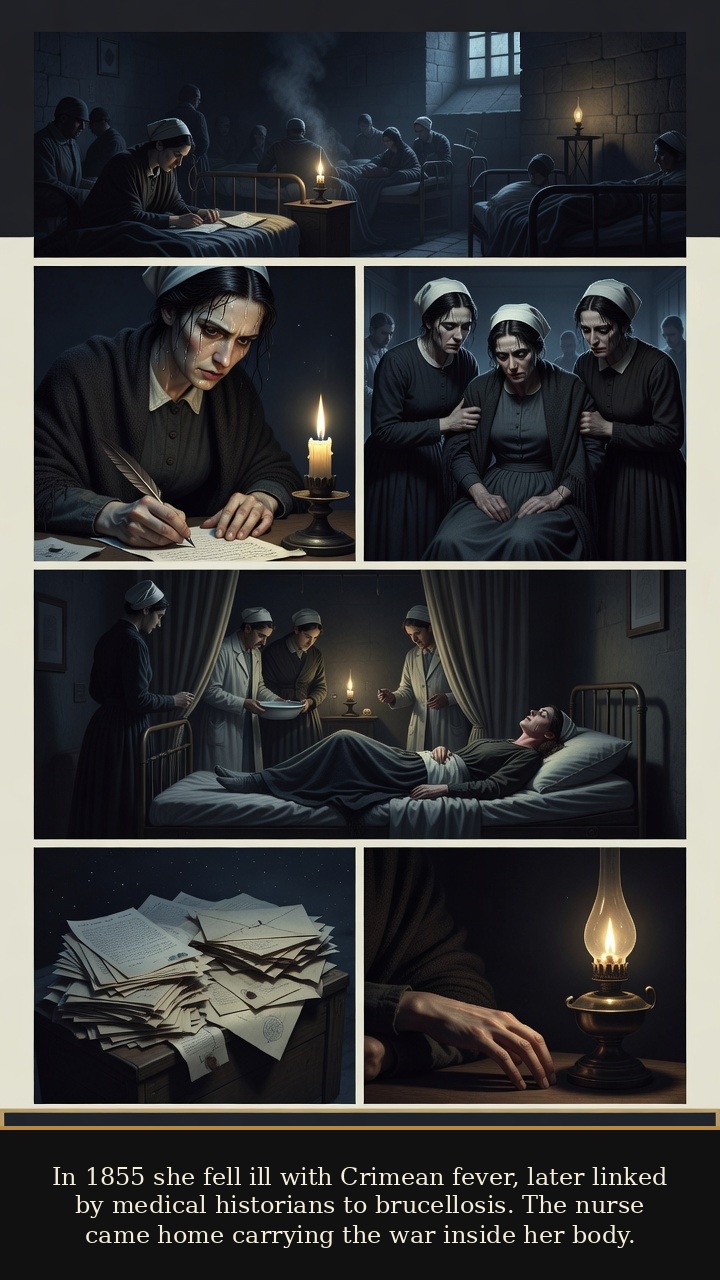
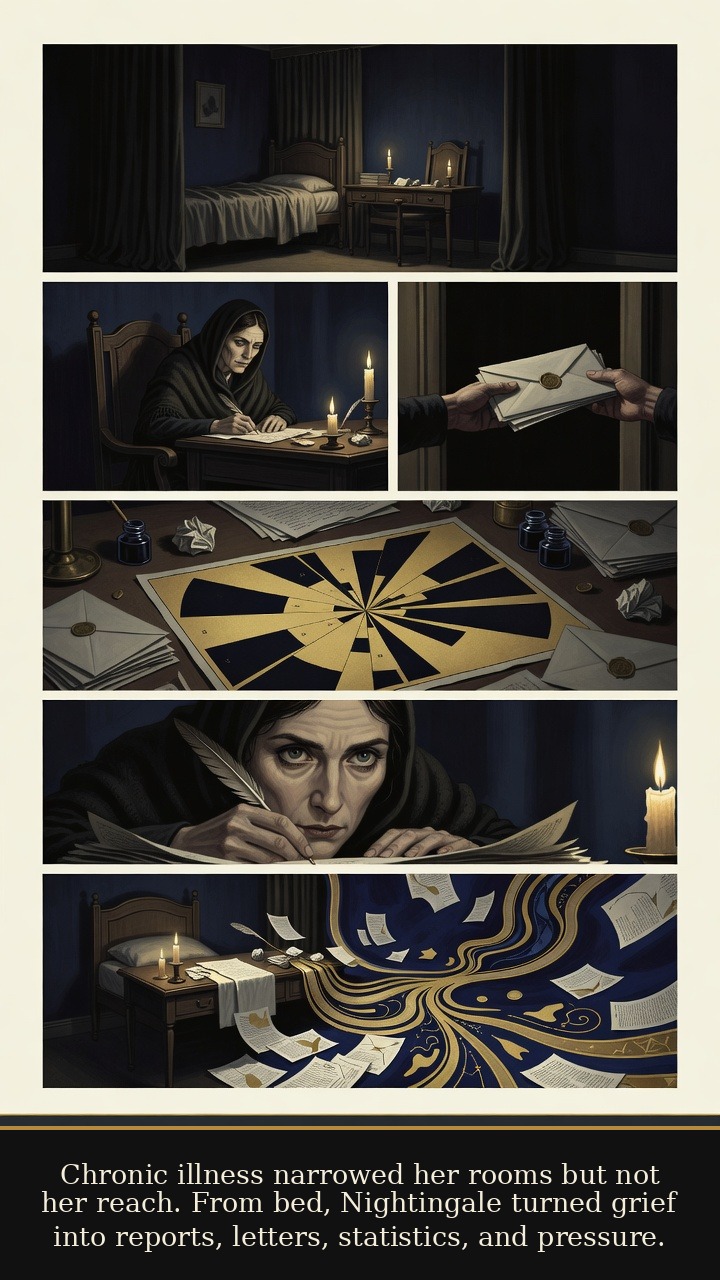
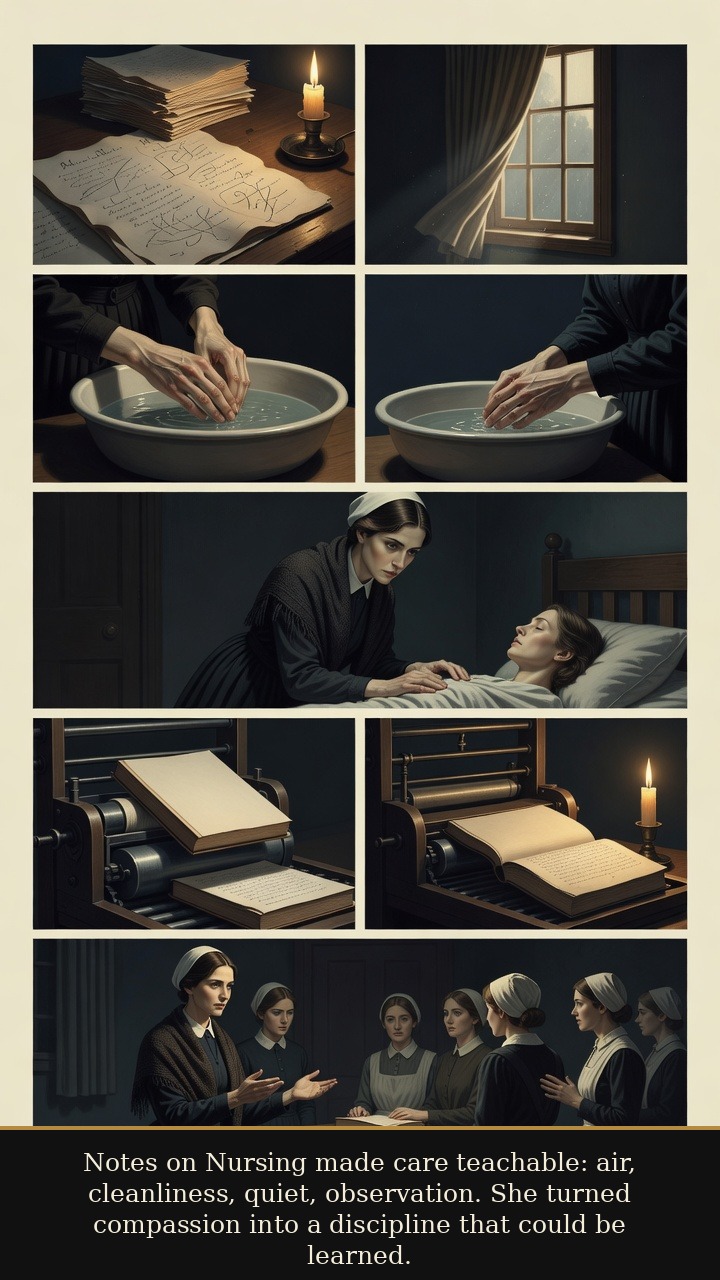
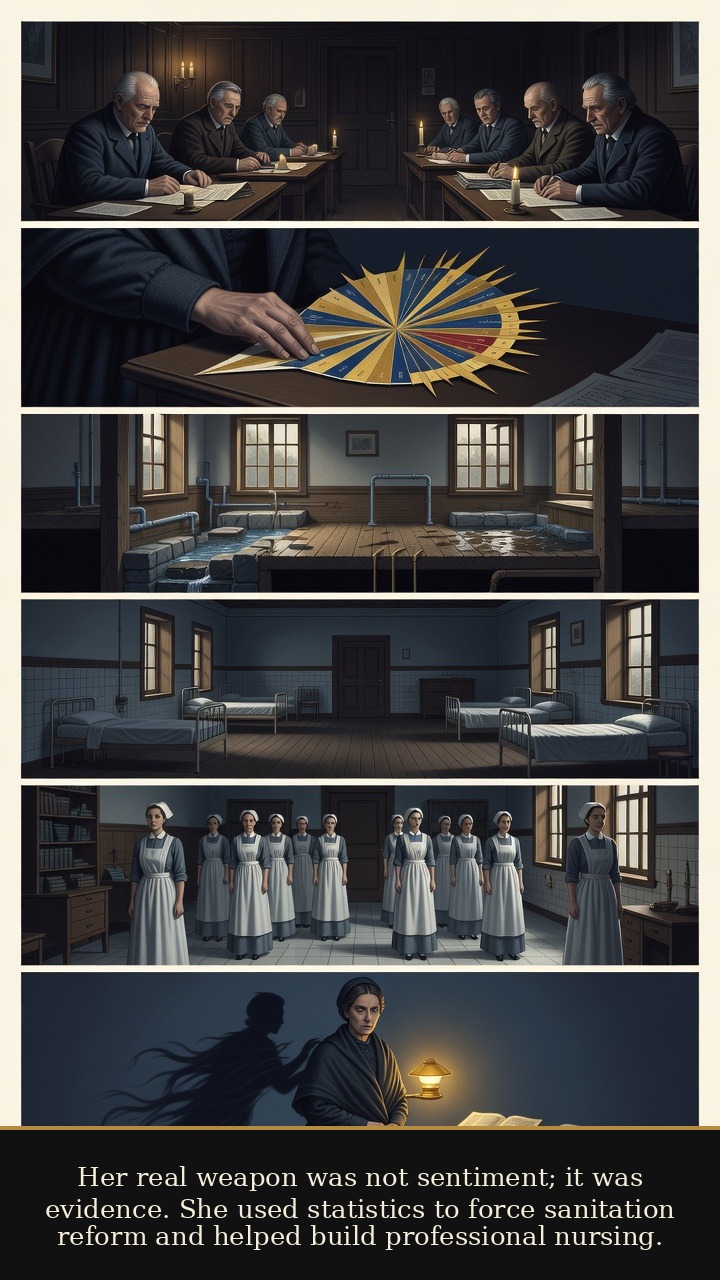
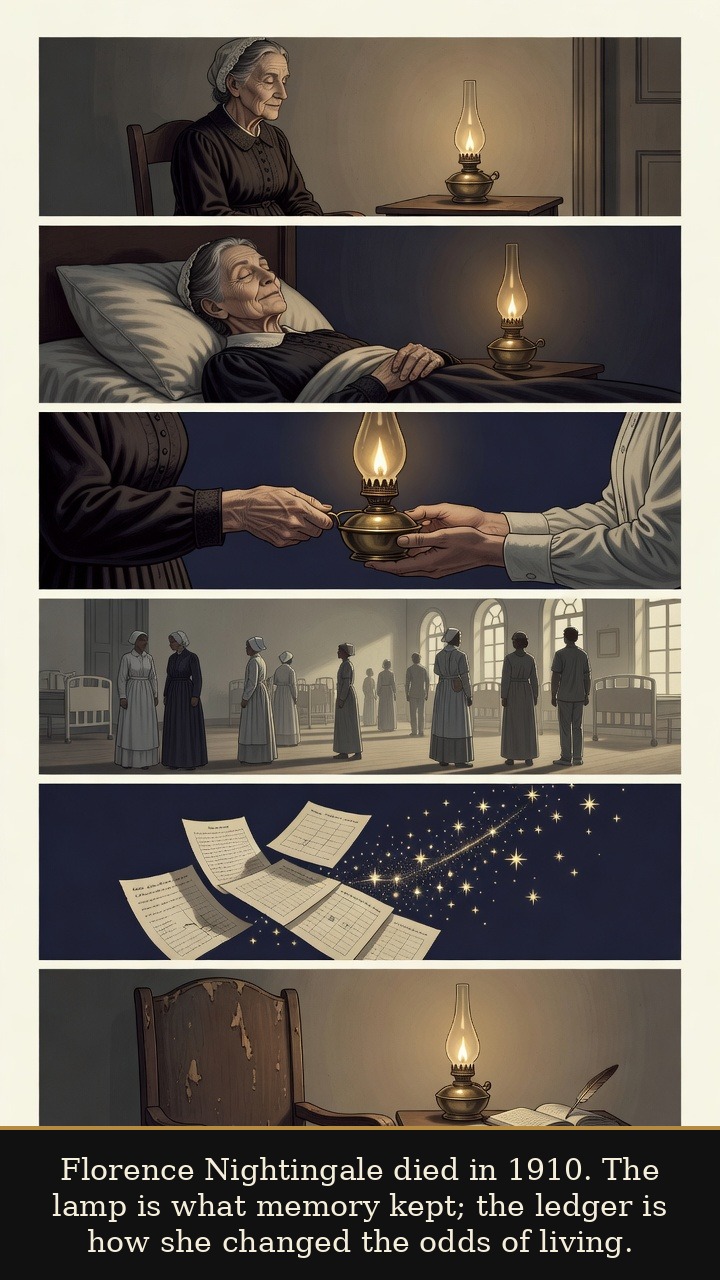
Florence Nightingale (1820–1910) was a British nurse, statistician, and social reformer. Encyclopaedia Britannica records her birth in Florence, Italy, her death in London on August 13, 1910, her Crimean War work at Scutari, her reputation as the Lady with the Lamp, her Crimean fever and later chronic illness, her 1859 Notes on Nursing, and the 1860 Nightingale Training School. The Guardian’s 1910 obituary confirms her death and describes her as the organiser and inspirer of the Crimean nursing service. The New York Times archive obituary confirms her death at ninety after a long invalid period. A PubMed-indexed medical history identifies her Crimean fever as likely brucellosis and traces the chronic illness that followed. Her worth is not just the lamp-lit image. Nightingale made care measurable without making it cold: sanitation, observation, ventilation, statistics, training, and public pressure became tools against preventable death.