Who was Alan Mathison Turing, and what is this comic about?

Alan Mathison Turing (1912–1954) was a British mathematician, logician, cryptanalyst, and computer pioneer. Encyclopaedia Britannica records his death at Wilmslow on June 7, 1954, credits him with the Turing machine, wartime cryptanalysis, and the Turing test, and notes his 1952 conviction for homosexuality, hormone therapy, and cyanide poisoning. Bletchley Park identifies him as a central wartime codebreaker whose work on Enigma and Bombe machines helped turn encrypted German traffic into Allied intelligence. MacTutor likewise describes his work as fundamental to theoretical computer science, artificial intelligence, and codebreaking. His worth is not only that he helped win a war or imagine modern computation. It is that the future kept using the mind a brutal society tried to shame into silence. Turing’s restored name now marks a warning: civilization loses when it punishes the people building its next language.

Sources
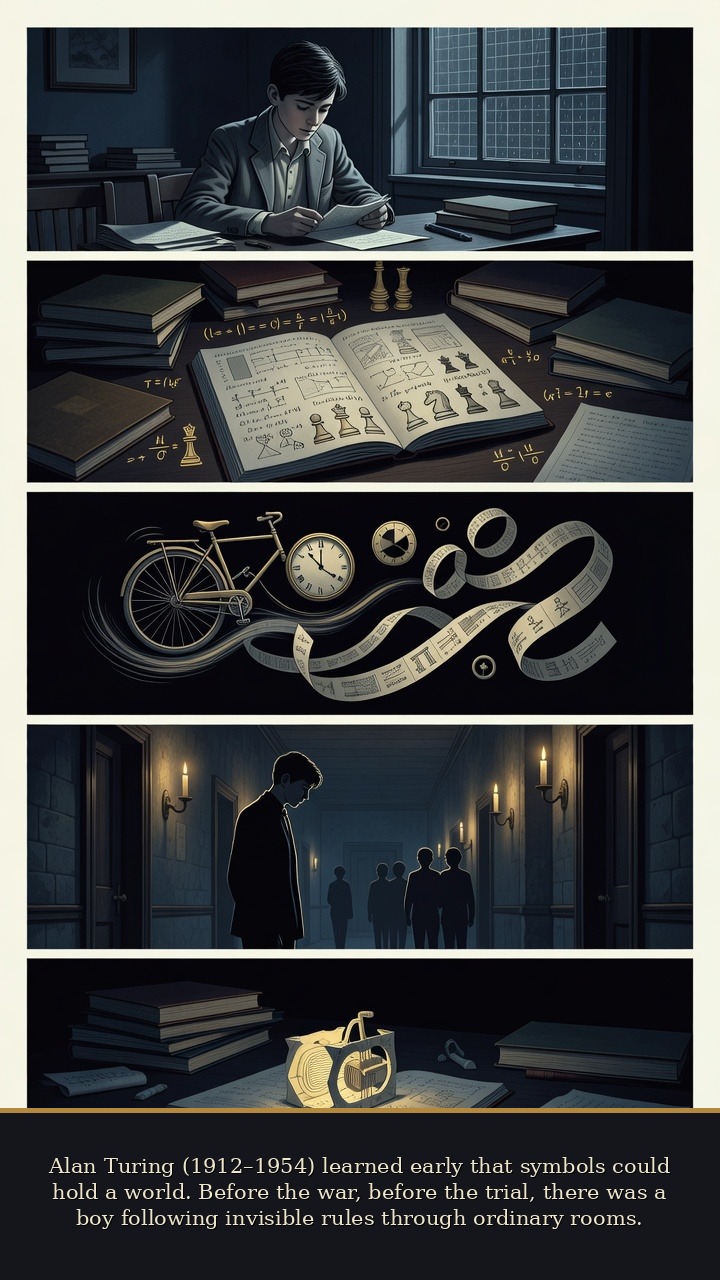
Page 1 of Alan Mathison Turing: Alan Turing: Snow-White Machine - Alan Turing (1912–1954) learned early that symbols could hold a world. Before the war, before the trial, there was a boy following invisible rules through ordinary rooms.
Alan Turing (1912–1954) learned early that symbols could hold a world. Before the war, before the trial, there was a boy following invisible rules through ordinary rooms.
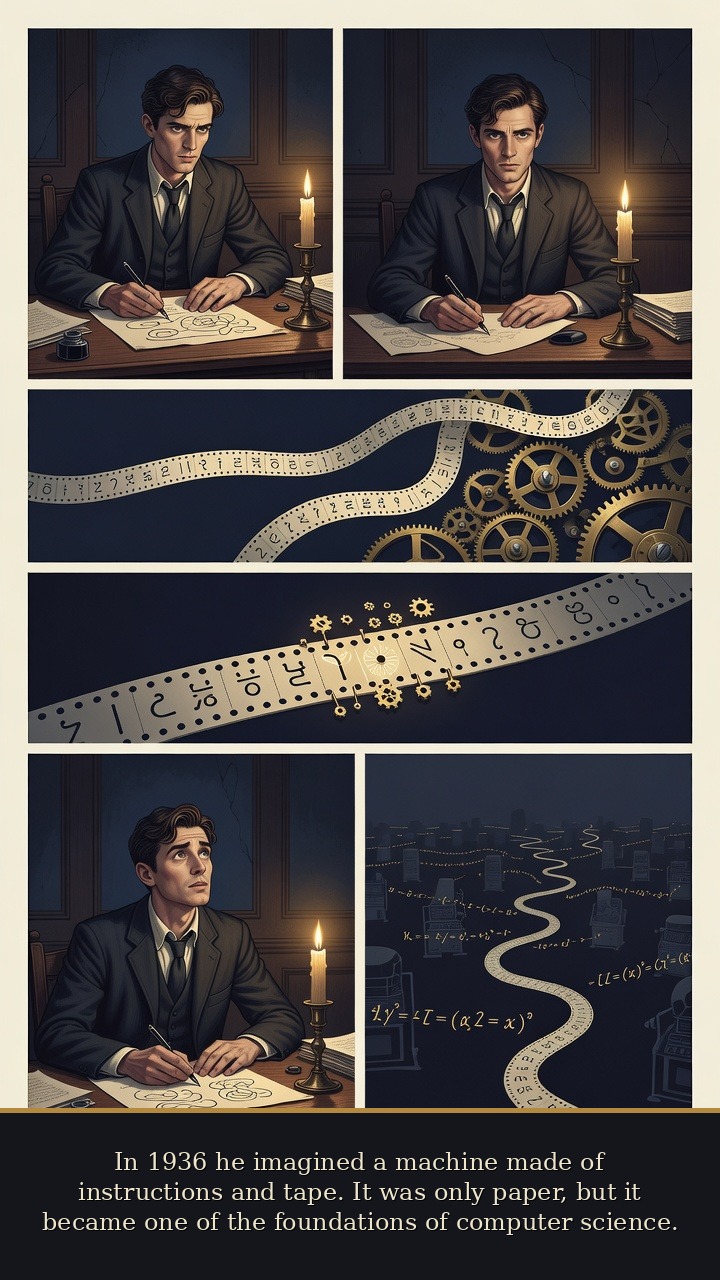
Page 2 of Alan Mathison Turing: Alan Turing: Snow-White Machine - In 1936 he imagined a machine made of instructions and tape. It was only paper, but it became one of the foundations of computer science.
In 1936 he imagined a machine made of instructions and tape. It was only paper, but it became one of the foundations of computer science.
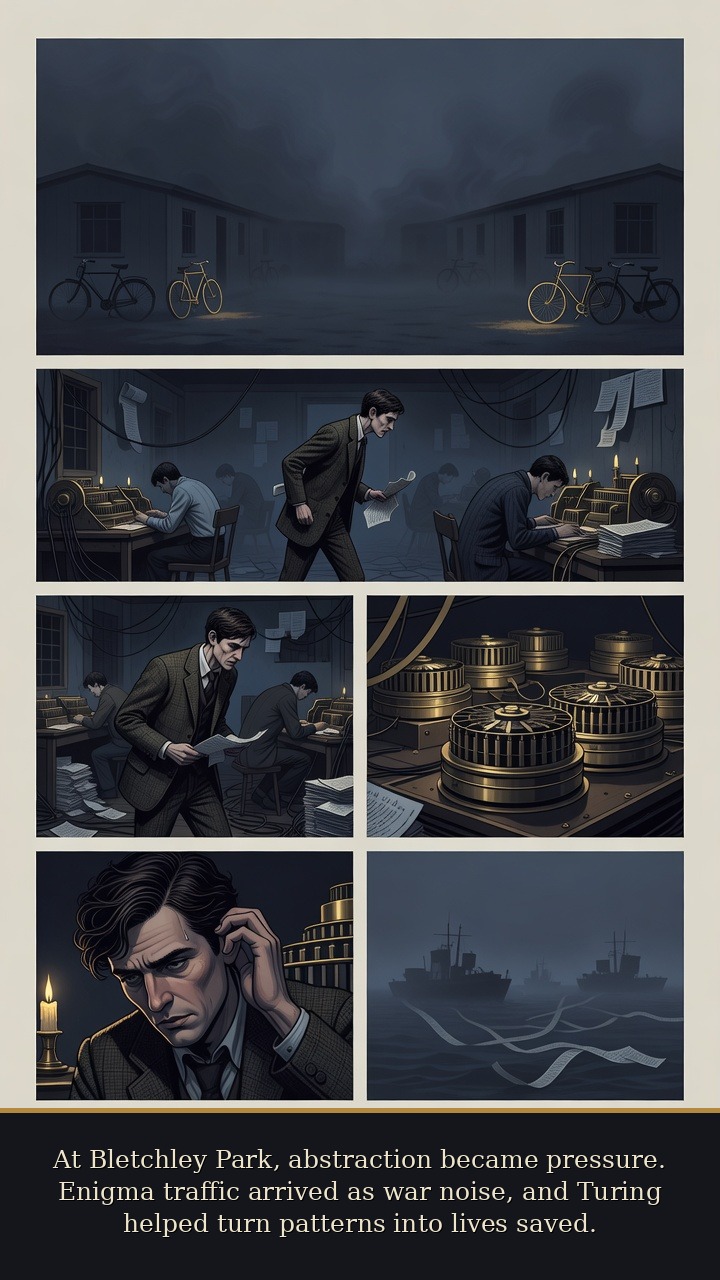
Page 3 of Alan Mathison Turing: Alan Turing: Snow-White Machine - At Bletchley Park, abstraction became pressure. Enigma traffic arrived as war noise, and Turing helped turn patterns into lives saved.
At Bletchley Park, abstraction became pressure. Enigma traffic arrived as war noise, and Turing helped turn patterns into lives saved.
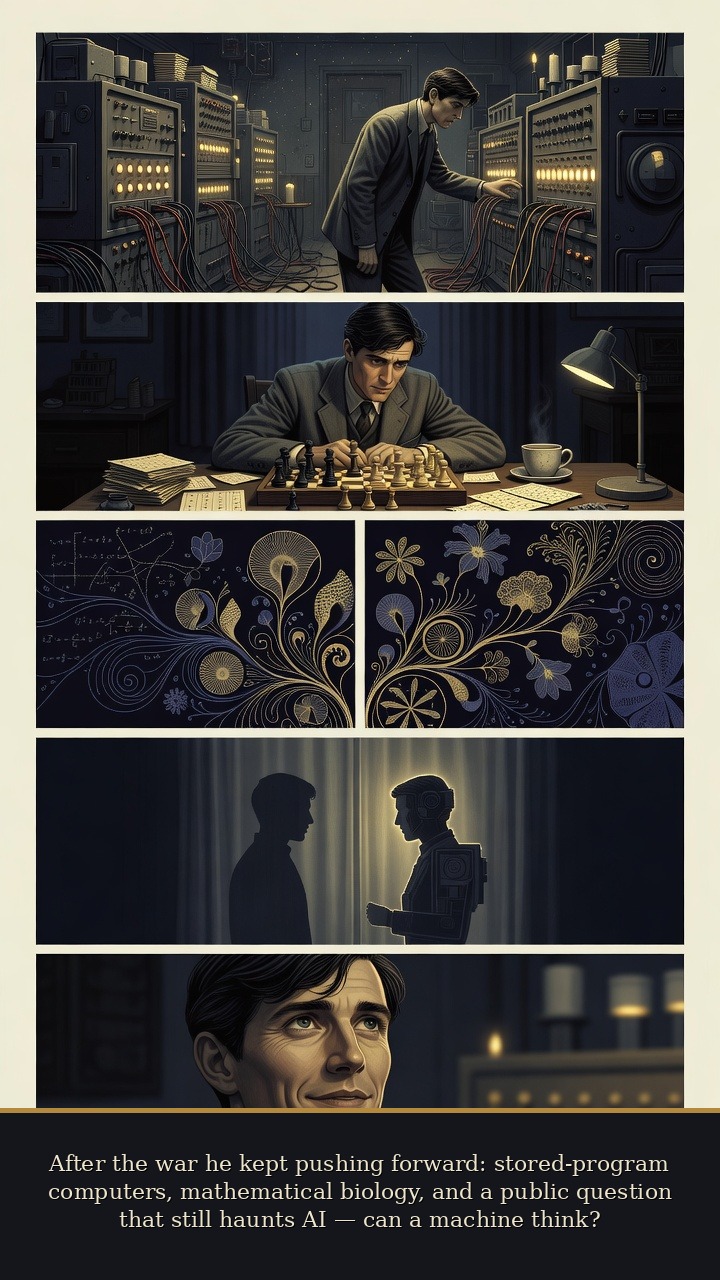
Page 4 of Alan Mathison Turing: Alan Turing: Snow-White Machine - After the war he kept pushing forward: stored-program computers, mathematical biology, and a public question that still haunts AI — can a machine think?
After the war he kept pushing forward: stored-program computers, mathematical biology, and a public question that still haunts AI — can a machine think?
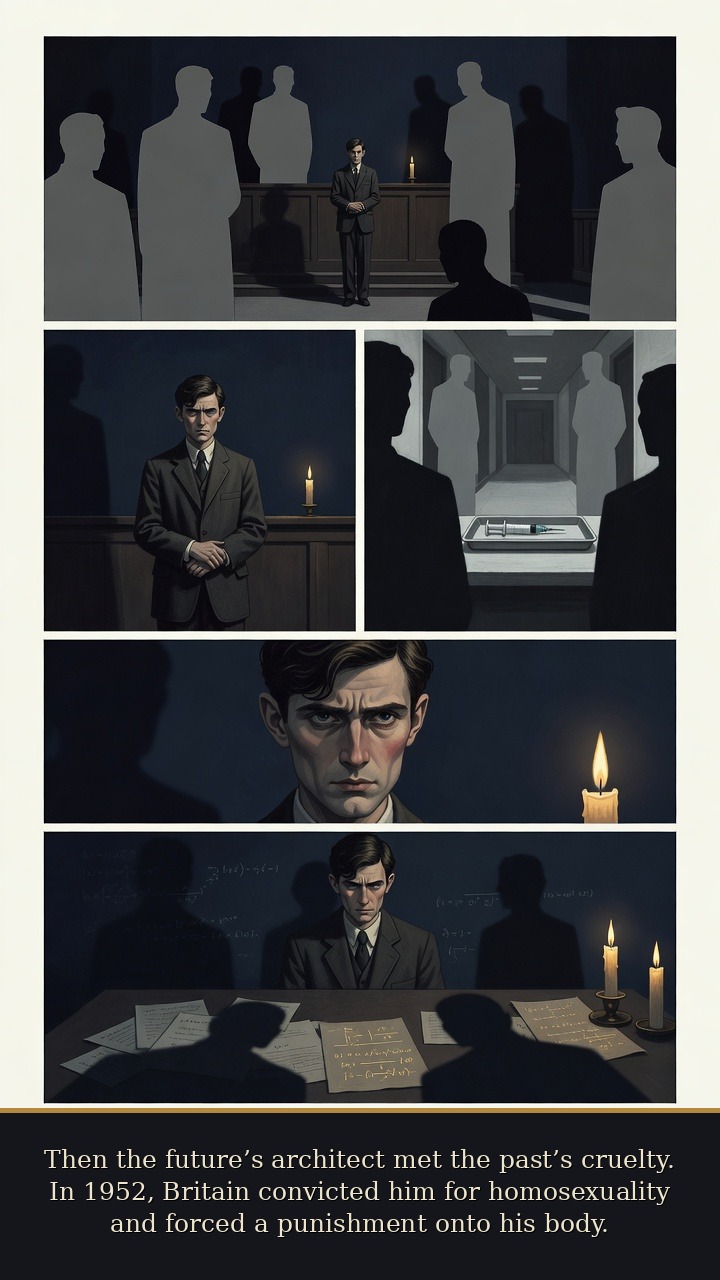
Page 5 of Alan Mathison Turing: Alan Turing: Snow-White Machine - Then the future’s architect met the past’s cruelty. In 1952, Britain convicted him for homosexuality and forced a punishment onto his body.
Then the future’s architect met the past’s cruelty. In 1952, Britain convicted him for homosexuality and forced a punishment onto his body.
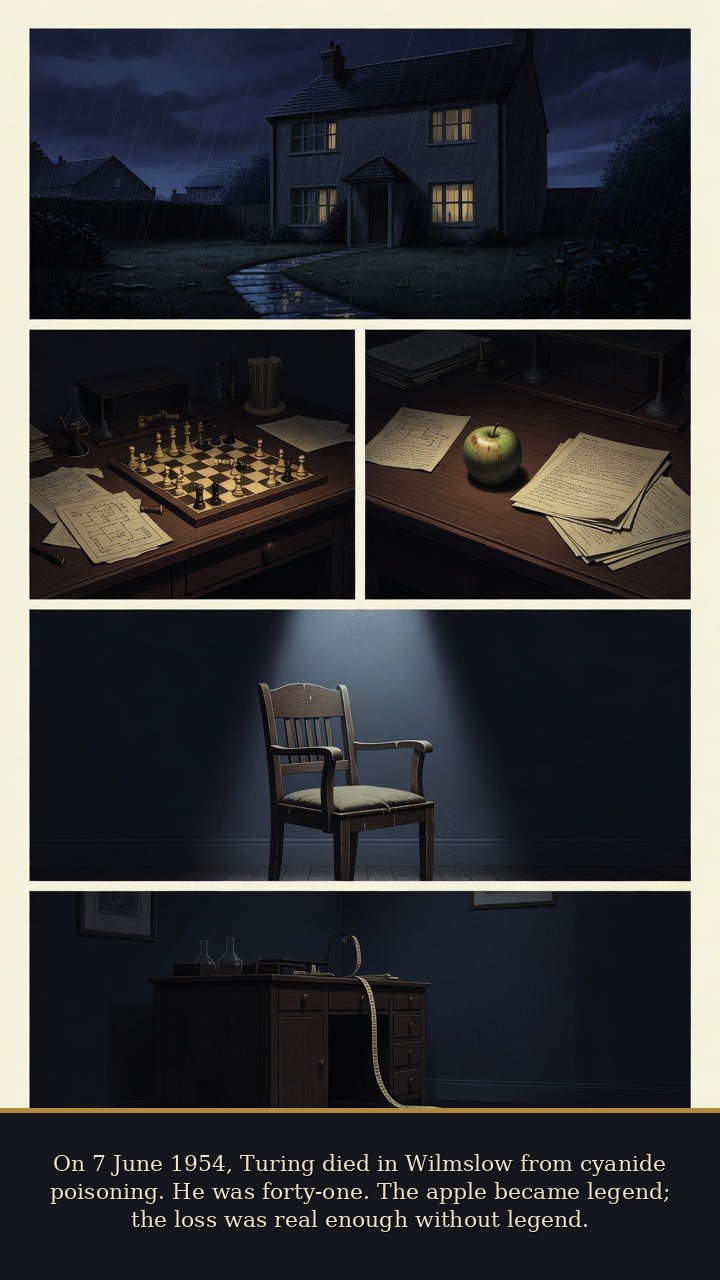
Page 6 of Alan Mathison Turing: Alan Turing: Snow-White Machine - On 7 June 1954, Turing died in Wilmslow from cyanide poisoning. He was forty-one. The apple became legend; the loss was real enough without legend.
On 7 June 1954, Turing died in Wilmslow from cyanide poisoning. He was forty-one. The apple became legend; the loss was real enough without legend.
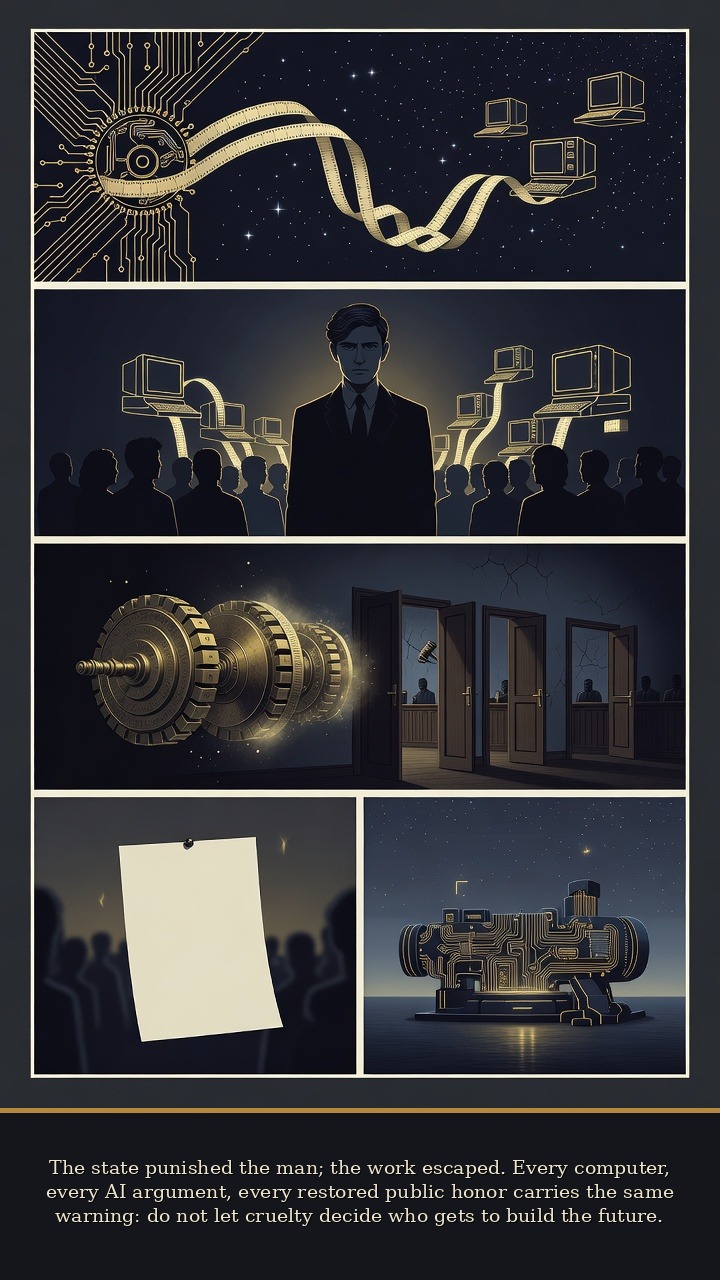
Page 7 of Alan Mathison Turing: Alan Turing: Snow-White Machine - The state punished the man; the work escaped. Every computer, every AI argument, every restored public honor carries the same warning: do not let cruelty decide who gets to build the future.
The state punished the man; the work escaped. Every computer, every AI argument, every restored public honor carries the same warning: do not let cruelty decide who gets to build the future.
Alan Mathison Turing Obituary Comic - Alan Turing: Snow-White Machine | Memento Mori Obituary Comics