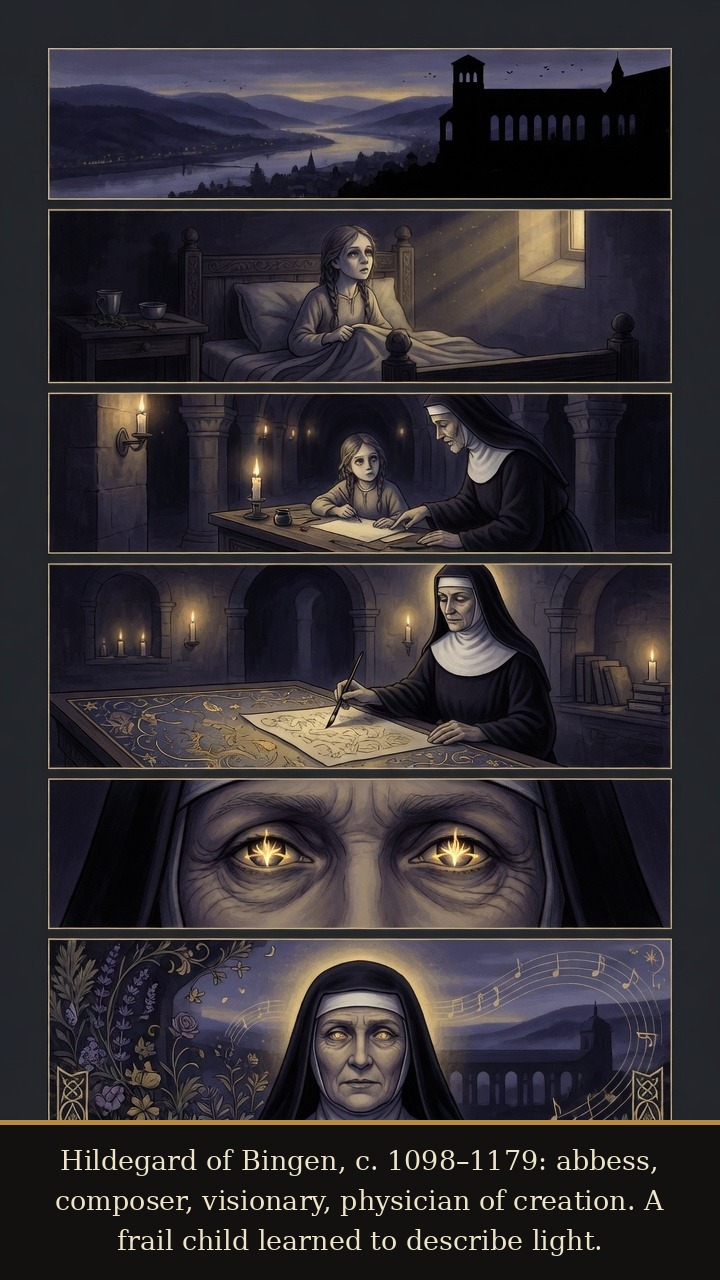
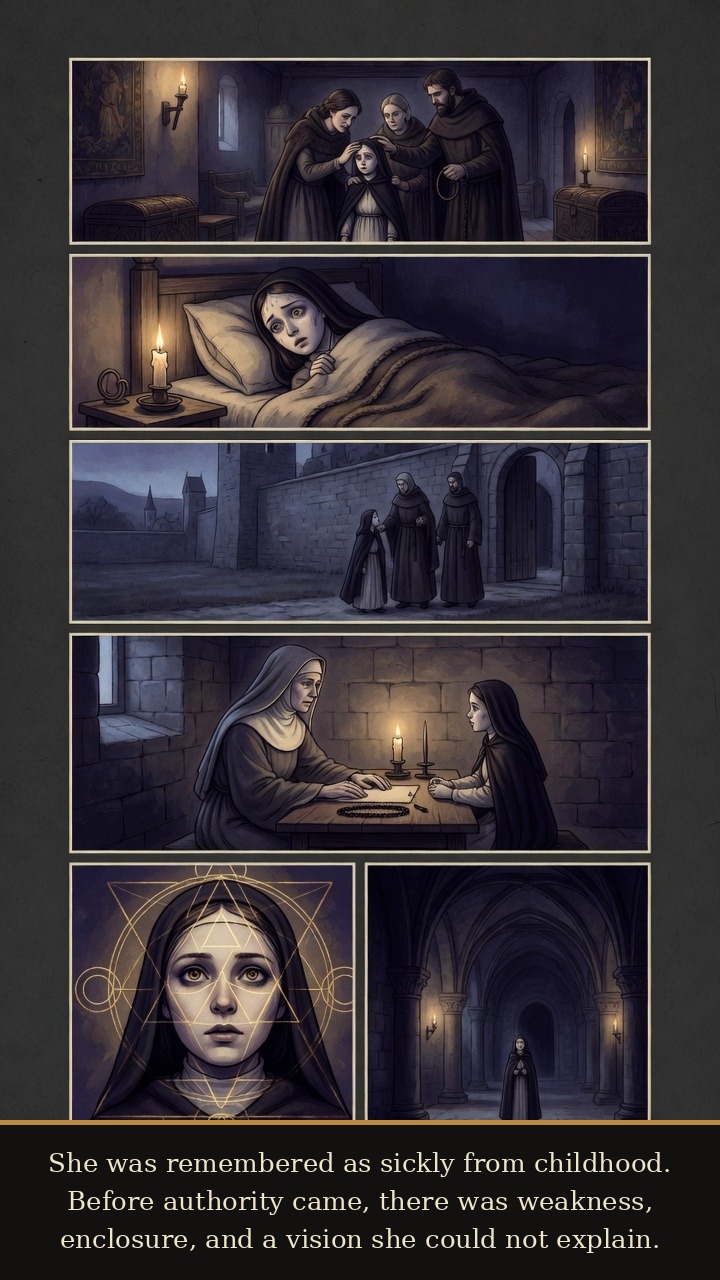
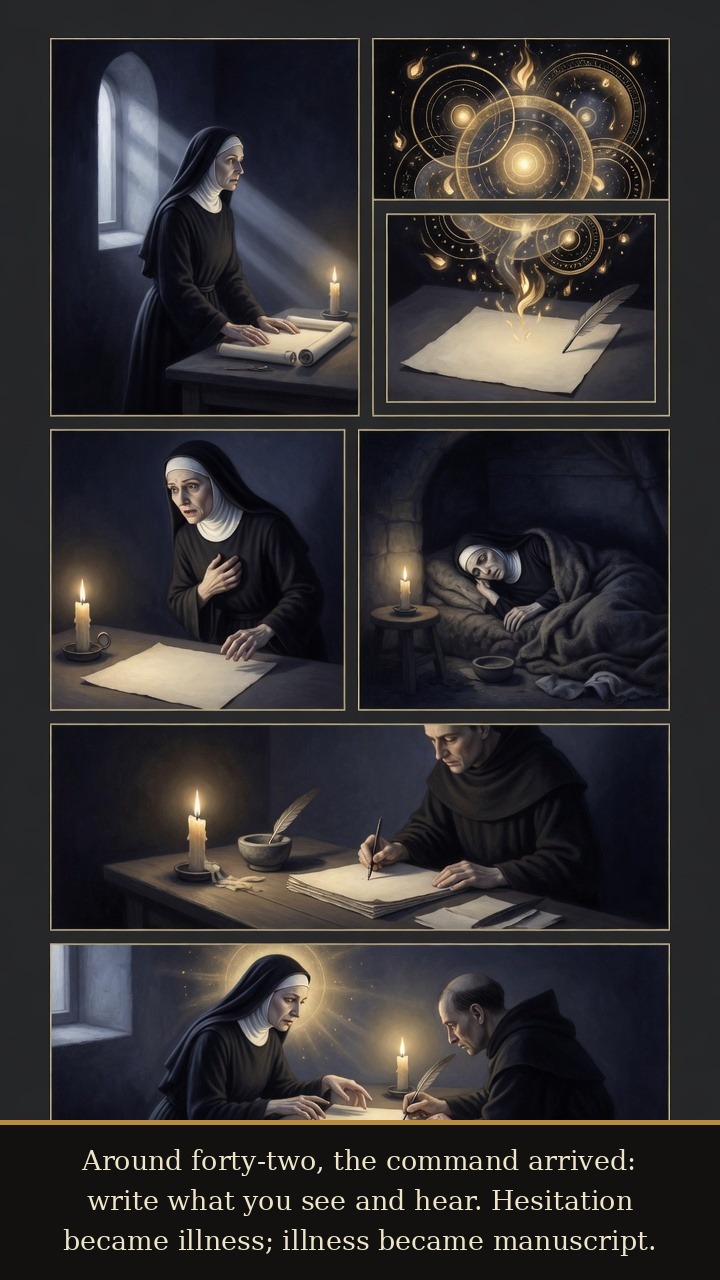
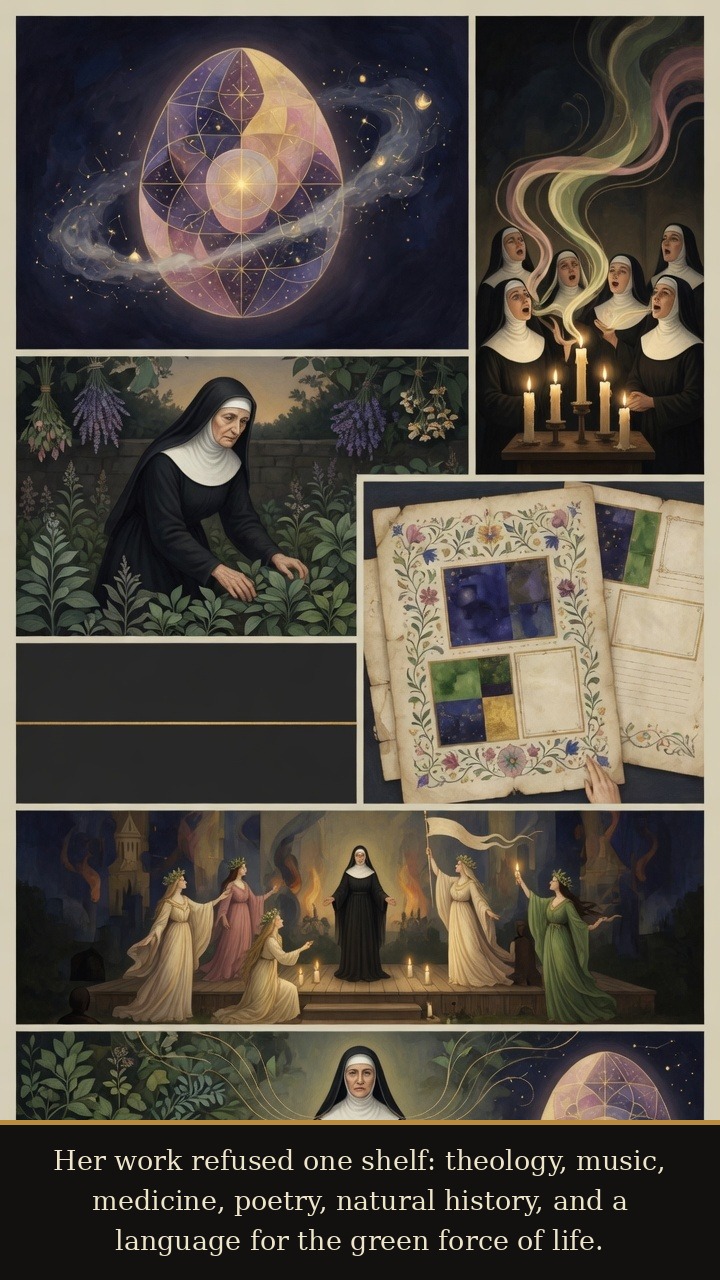
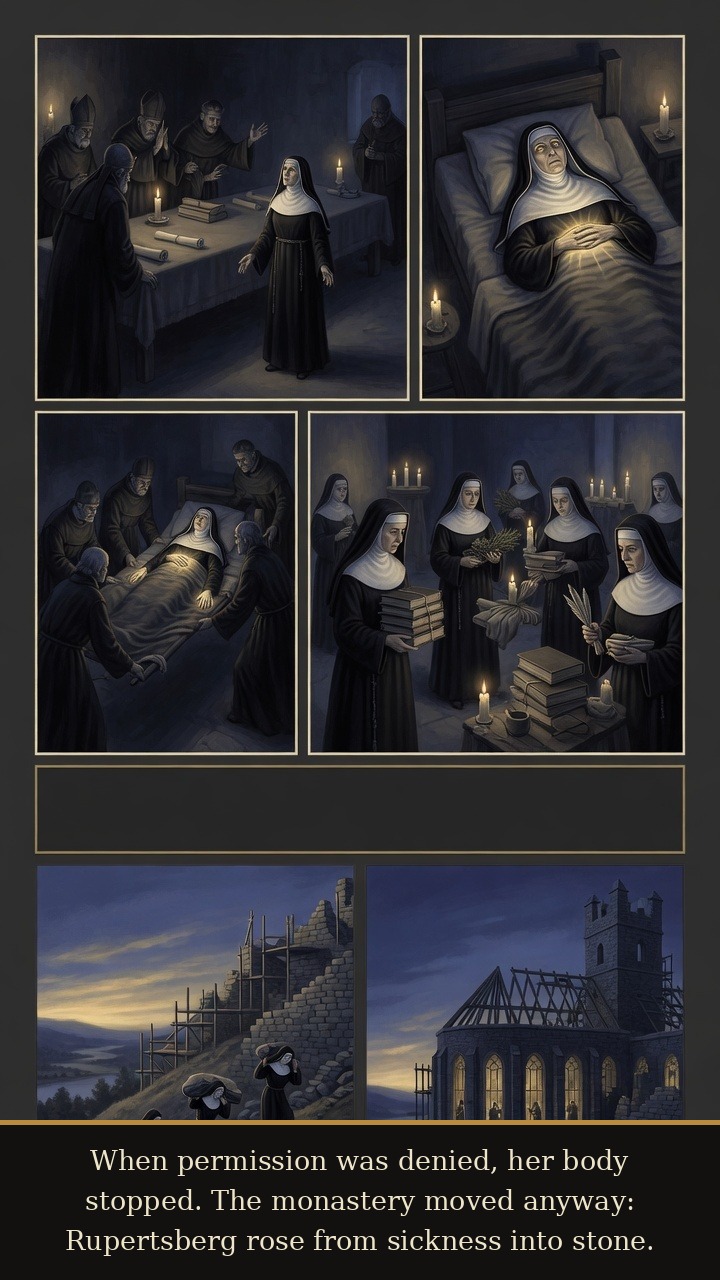
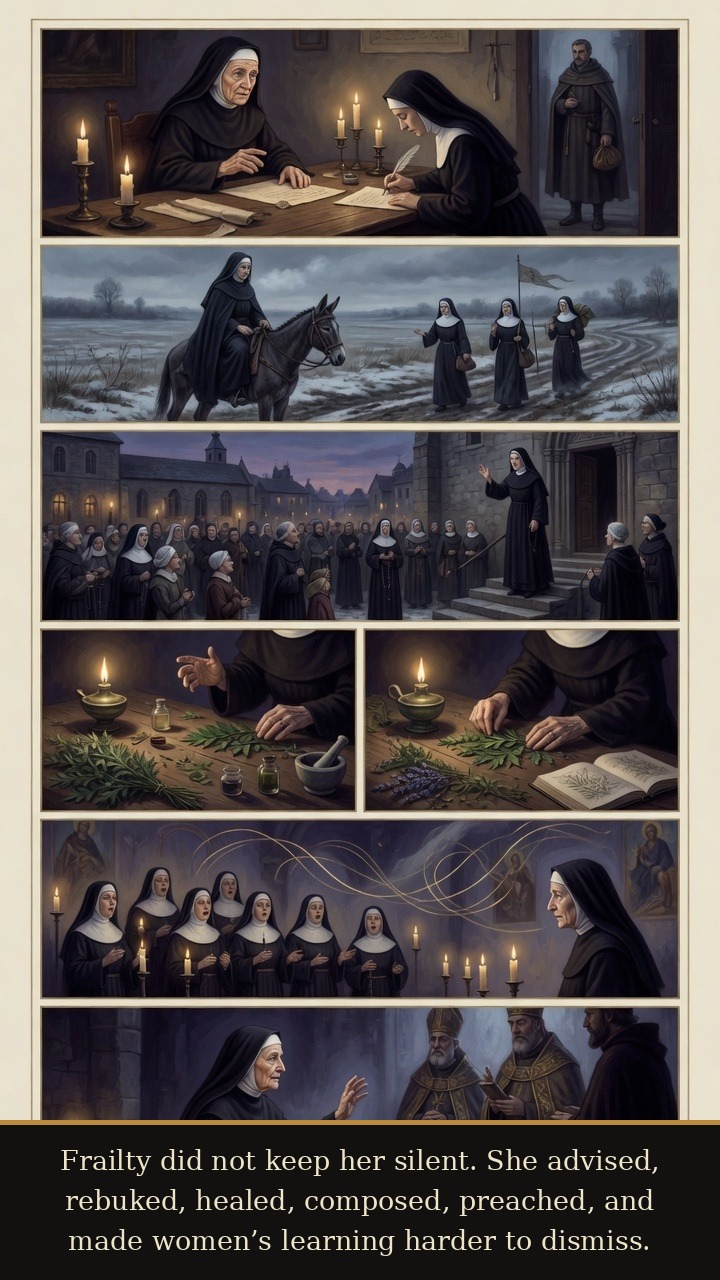
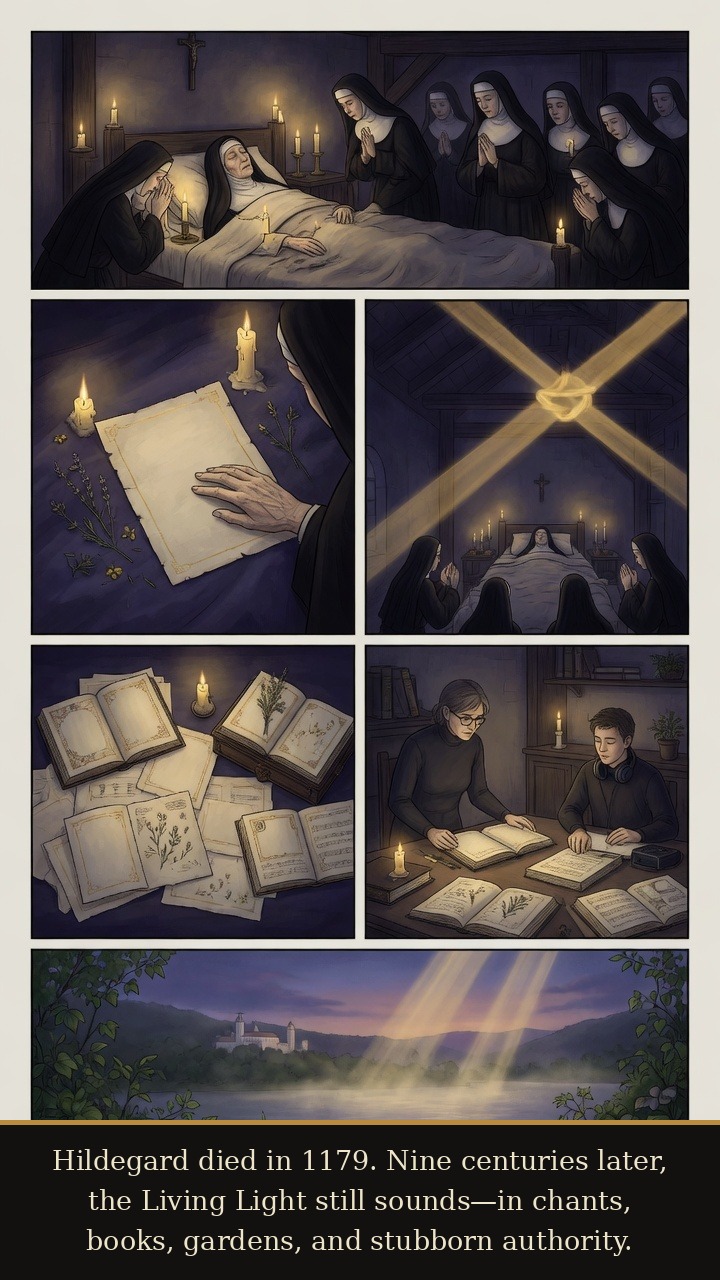
Hildegard of Bingen (c. 1098–1179) was verified through Britannica, the Vatican apostolic letter proclaiming her Doctor of the Church, and the Catholic Encyclopedia. These sources establish her death on September 17, 1179, her Benedictine leadership, childhood sickness, visionary writings including Scivias, musical composition, natural and medical writing, preaching, correspondence, and the founding of Rupertsberg and Eibingen. The comic frames her mortality hinge as lifelong bodily fragility becoming disciplined public work rather than as spectacle: illness, vision, and institutional resistance are converted into manuscripts, chants, monasteries, and intellectual authority. Her worth is durable because she made a medieval woman’s inner experience legible as theology, art, medicine, and governance. Nine centuries later, her music is still performed, her books still studied, and her 2012 recognition as Doctor of the Church confirms an afterlife built from stubborn light.