Who was Ludwig van Beethoven, and what is this comic about?

Ludwig van Beethoven (1770–1827) was verified through Britannica, the Kennedy Center, and Library of Congress resources. Britannica confirms his death in Vienna on March 26, 1827, his central place between Classical and Romantic music, the onset and deepening of deafness, and late masterworks. The Kennedy Center confirms the hearing-loss crisis around 1798, the 1802 Heiligenstadt Testament, and the 1824 Ninth Symphony amid near-complete deafness. Library of Congress Beethoven resources corroborate the 1770–1827 chronology and late-period canon. His worth is the transformation of private sensory loss into a public musical language of struggle, experiment, and fellowship.

Sources
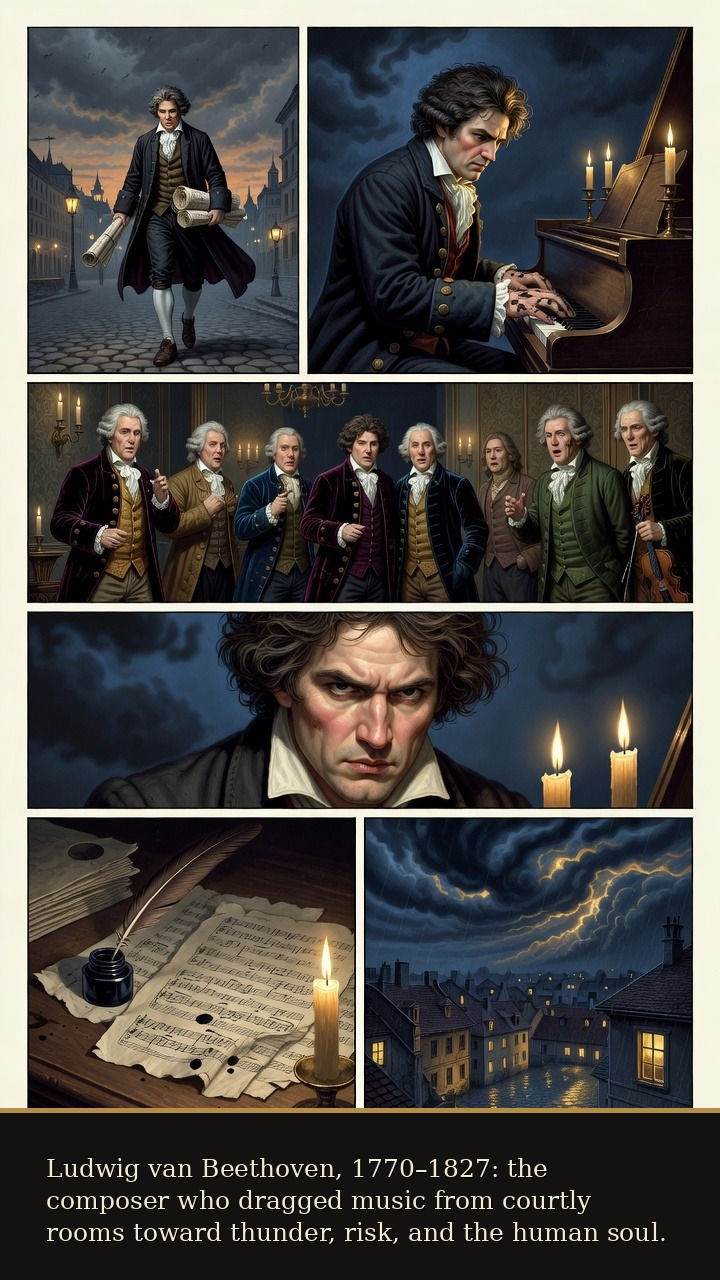
Page 1 of Ludwig van Beethoven: Ludwig van Beethoven: Silence and Ode - Young Beethoven arrives in Vienna as a storm-force pianist and composer.
Young Beethoven arrives in Vienna as a storm-force pianist and composer.
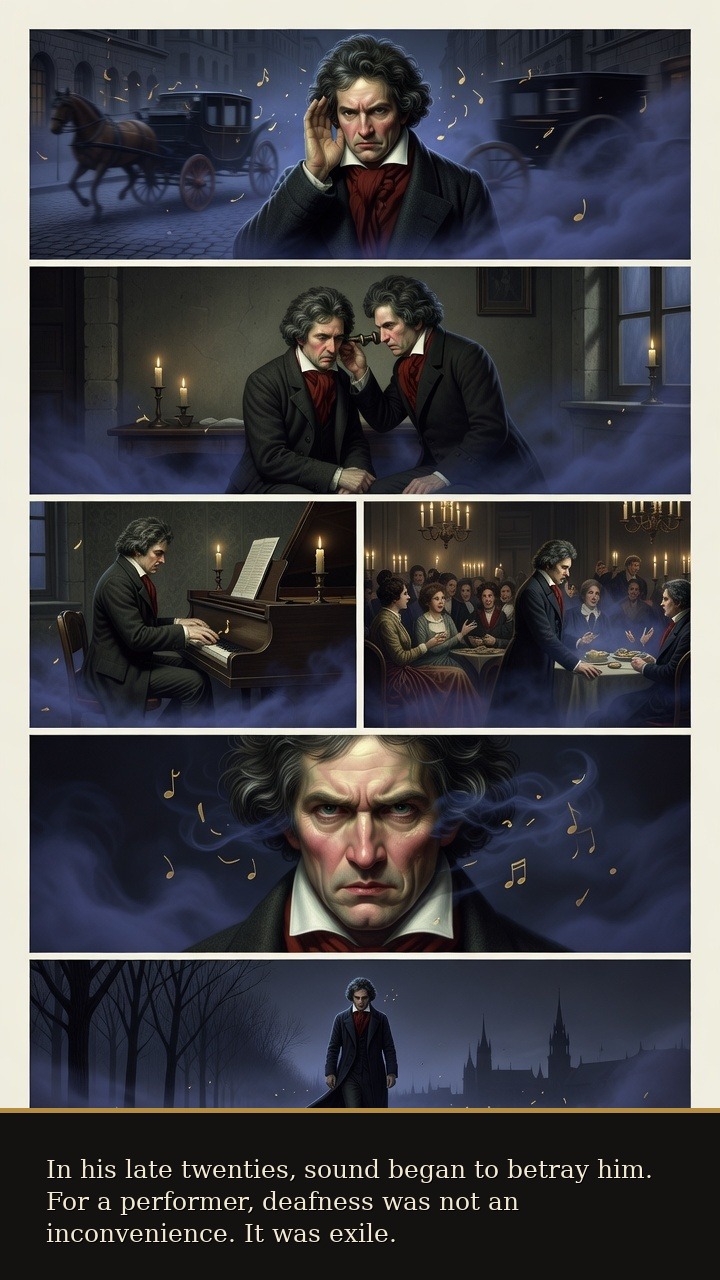
Page 2 of Ludwig van Beethoven: Ludwig van Beethoven: Silence and Ode - Hearing loss begins to isolate the performer from sound and society.
Hearing loss begins to isolate the performer from sound and society.
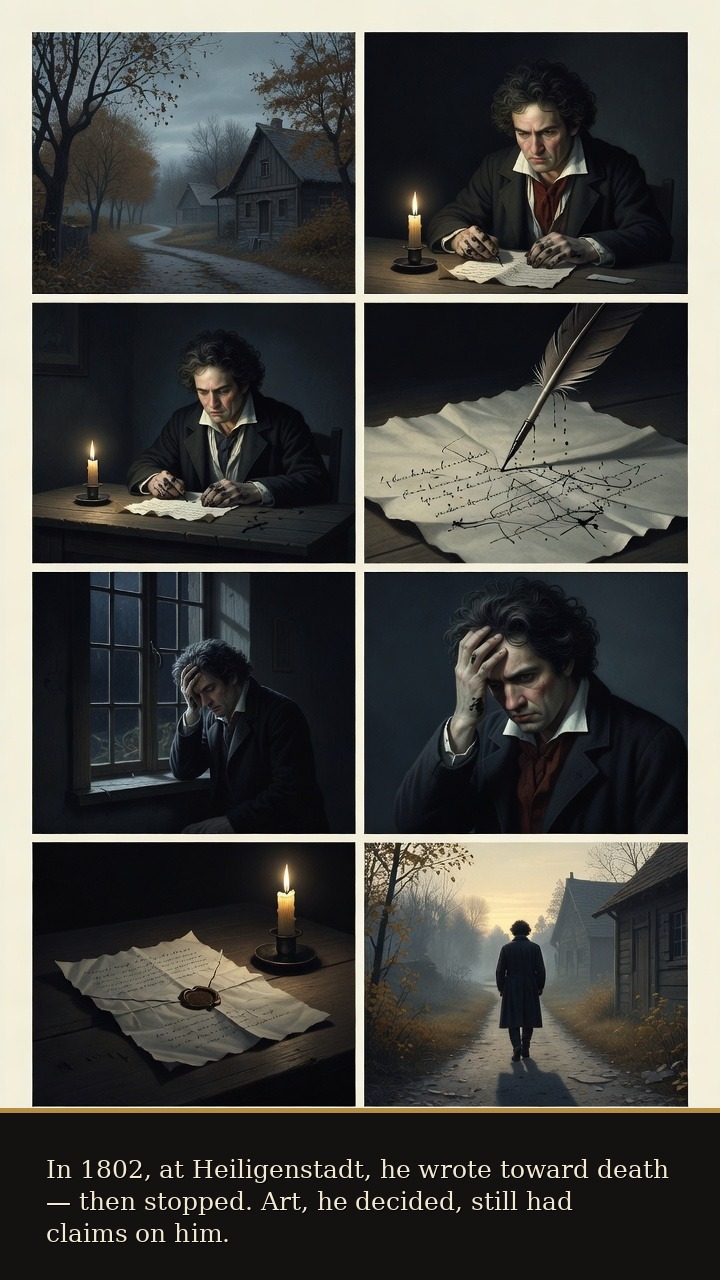
Page 3 of Ludwig van Beethoven: Ludwig van Beethoven: Silence and Ode - At Heiligenstadt, despair nearly wins before art pulls him back.
At Heiligenstadt, despair nearly wins before art pulls him back.
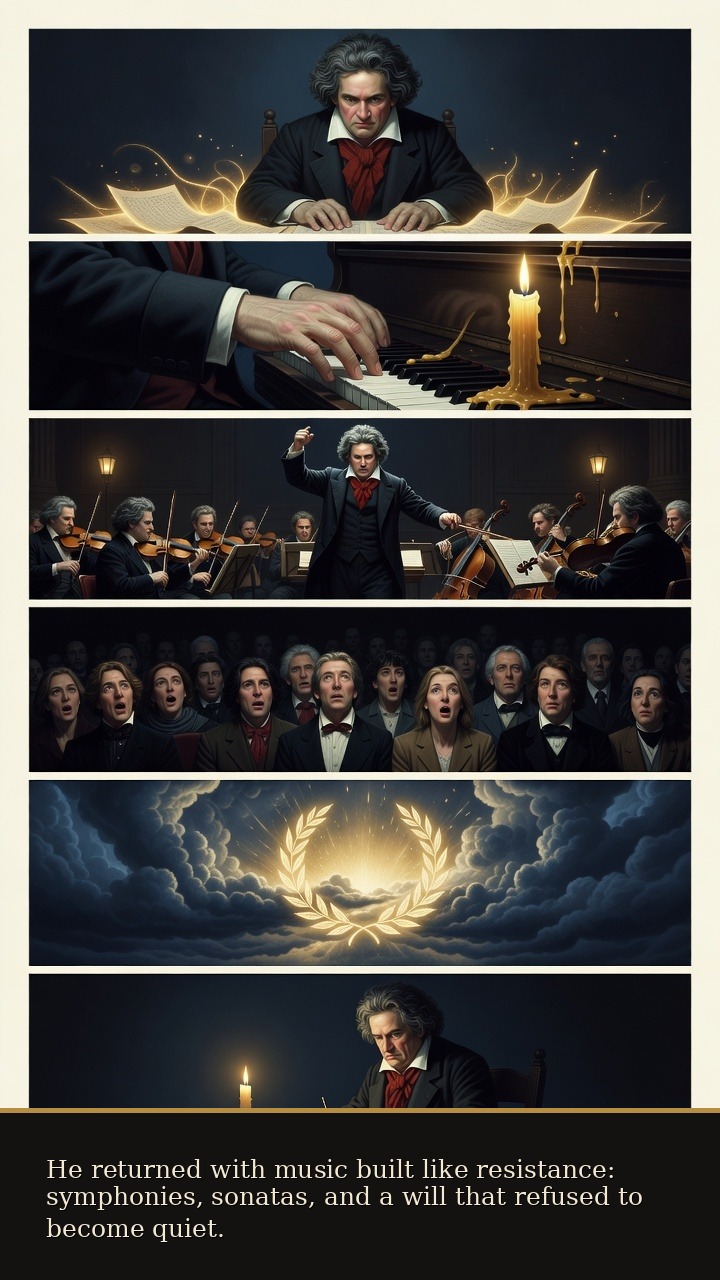
Page 4 of Ludwig van Beethoven: Ludwig van Beethoven: Silence and Ode - He returns with heroic middle-period works built like resistance.
He returns with heroic middle-period works built like resistance.
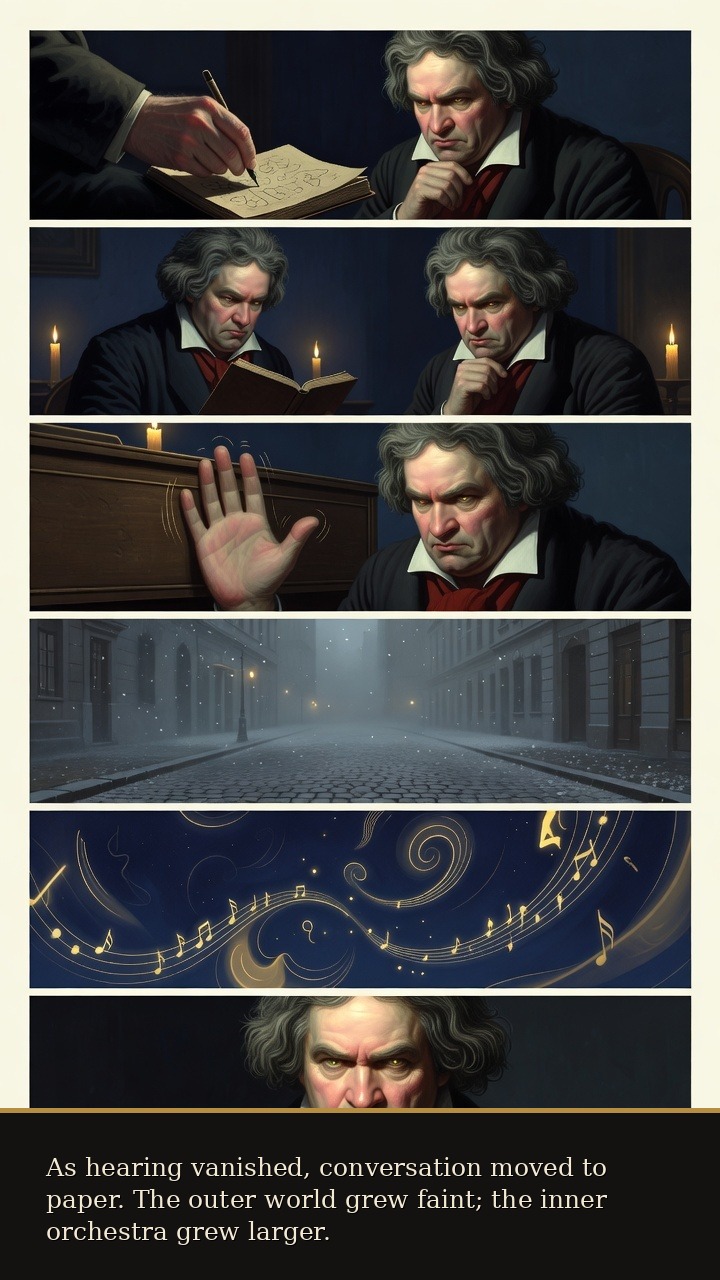
Page 5 of Ludwig van Beethoven: Ludwig van Beethoven: Silence and Ode - Conversation books replace speech as the inner orchestra grows.
Conversation books replace speech as the inner orchestra grows.
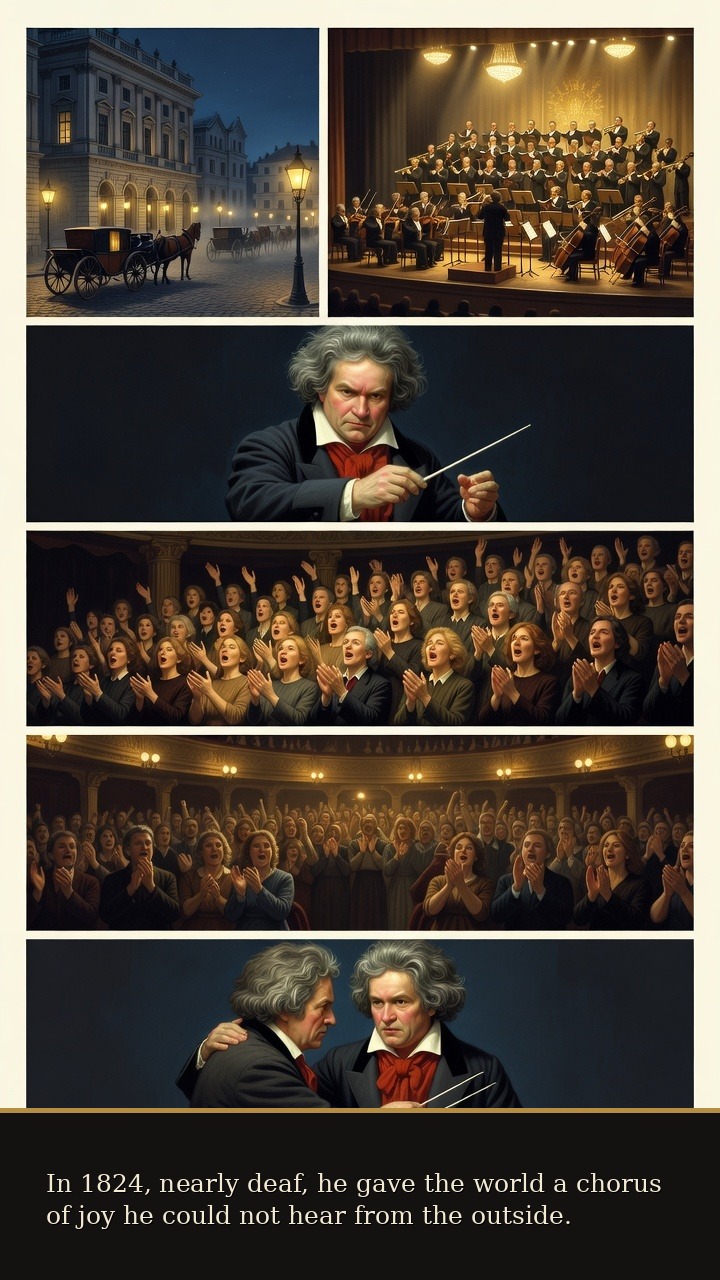
Page 6 of Ludwig van Beethoven: Ludwig van Beethoven: Silence and Ode - The Ninth Symphony offers public joy from a composer nearly deaf.
The Ninth Symphony offers public joy from a composer nearly deaf.
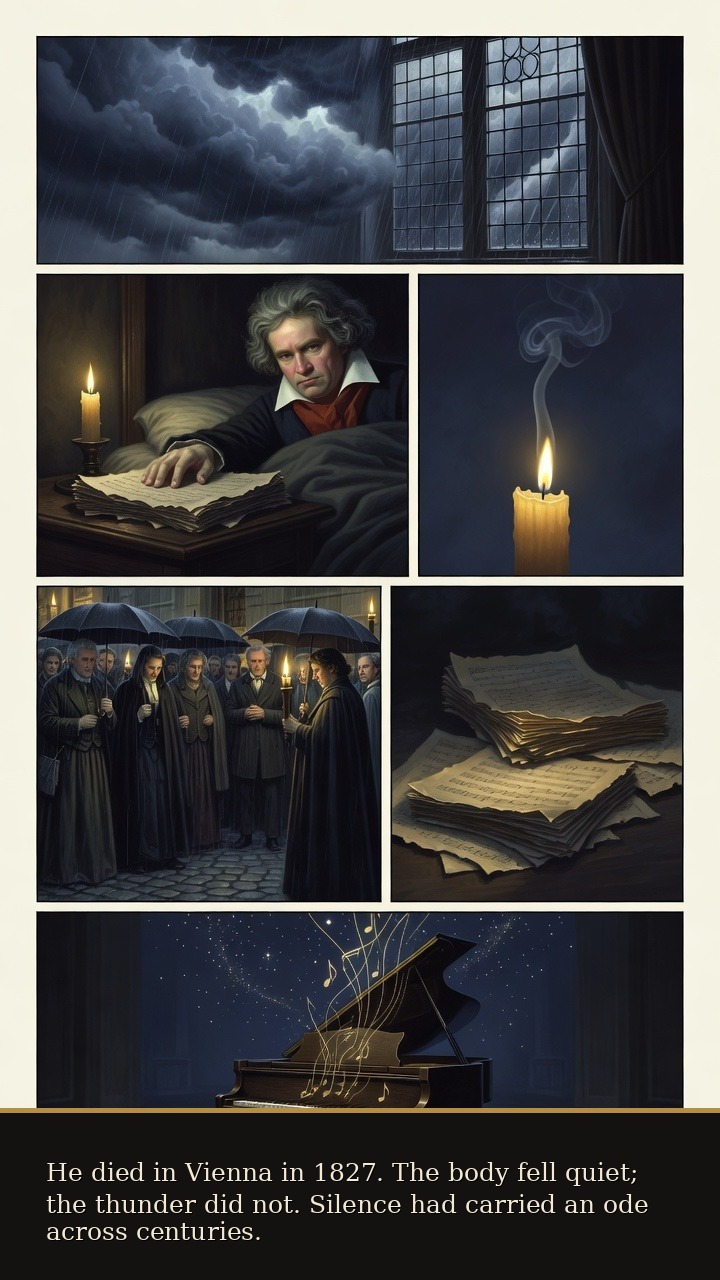
Page 7 of Ludwig van Beethoven: Ludwig van Beethoven: Silence and Ode - Death ends the body, but silence carries the ode forward.
Death ends the body, but silence carries the ode forward.