
Who was Antonio Francesco Gramsci, and what is this comic about?

Antonio Francesco Gramsci (1891–1937) was verified through Encyclopaedia Britannica, the Stanford Encyclopedia of Philosophy, and Columbia University Press source metadata. Britannica confirms his birth and death dates, role as an Italian intellectual and Communist leader, Fascist imprisonment from 1926, and prison writings later published as the Prison Notebooks. Stanford confirms his November 8, 1926 arrest, imprisonment until 1937, and composition of the Prison Notebooks from 1929 onward. Columbia University Press identifies the Prison Notebooks as his seminal writings from imprisonment after the 1926 Fascist arrest and before his death in 1937. His worth is conceptual survival: the state damaged the body, but the notebooks gave future readers a vocabulary for cultural hegemony, civil society, intellectual work, and power operating through consent.

Sources
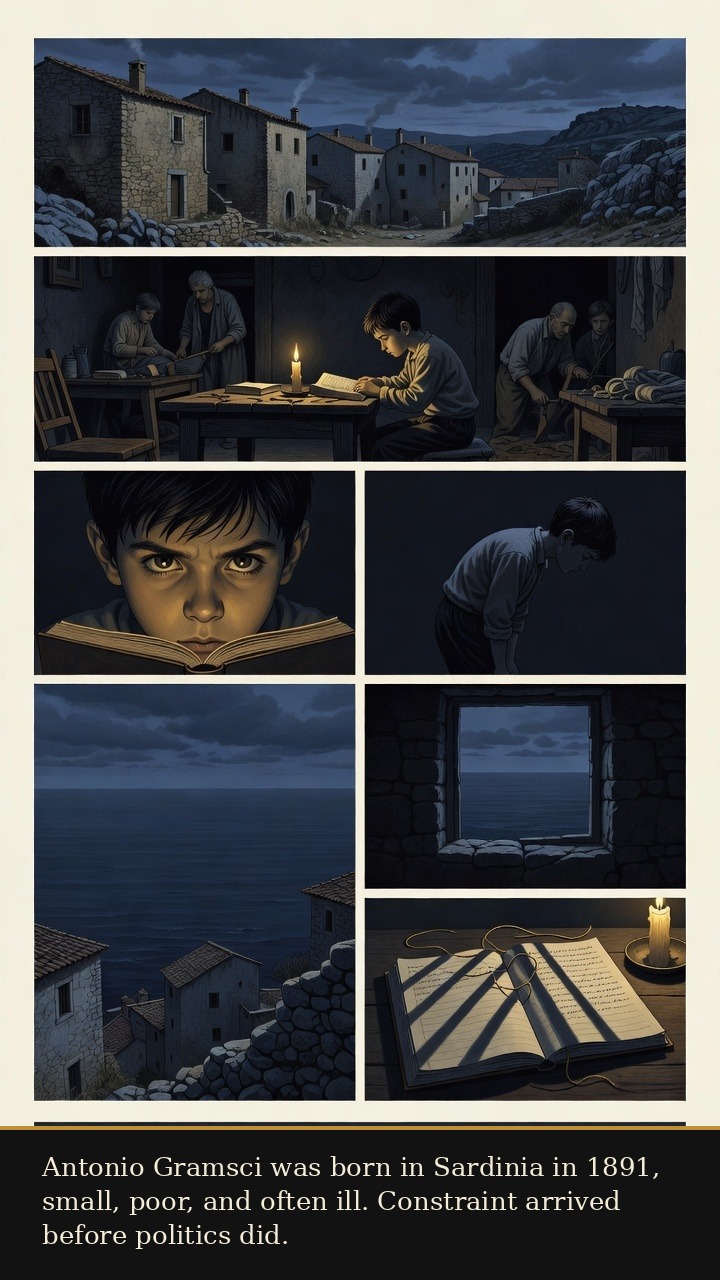
Page 1 of Antonio Francesco Gramsci: Antonio Gramsci: Prison Notebooks - Sardinia gives young Gramsci poverty, illness, constraint, and the first hard grammar of survival.
Sardinia gives young Gramsci poverty, illness, constraint, and the first hard grammar of survival.
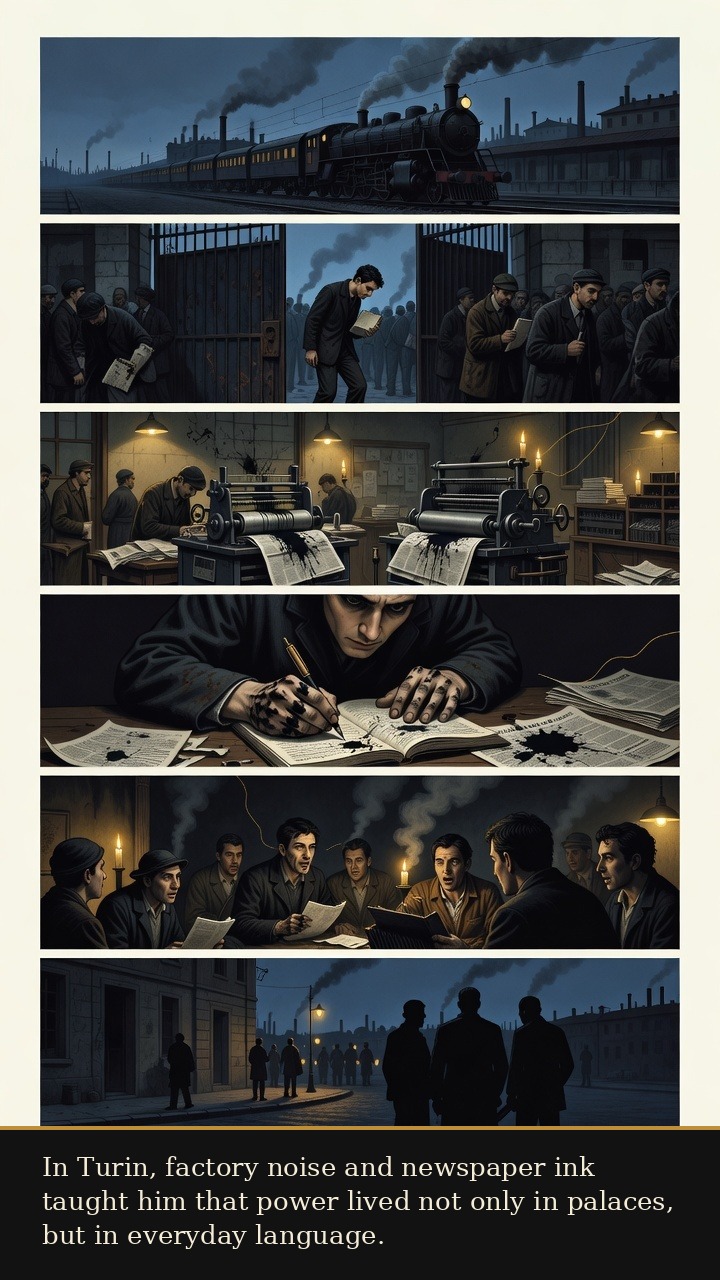
Page 2 of Antonio Francesco Gramsci: Antonio Gramsci: Prison Notebooks - Turin teaches him to read factories, newspapers, workers, and language as machinery of power.
Turin teaches him to read factories, newspapers, workers, and language as machinery of power.
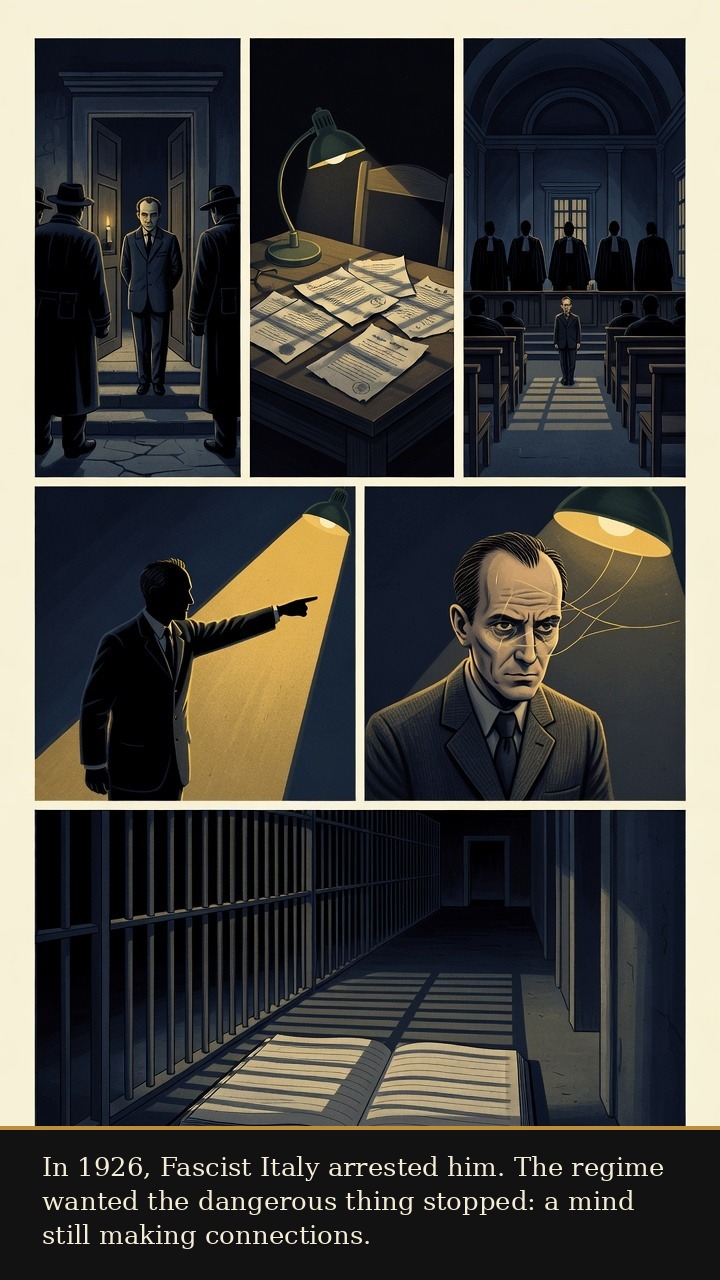
Page 3 of Antonio Francesco Gramsci: Antonio Gramsci: Prison Notebooks - Fascist Italy arrests him in 1926 and tries to stop a dangerous mind from functioning.
Fascist Italy arrests him in 1926 and tries to stop a dangerous mind from functioning.
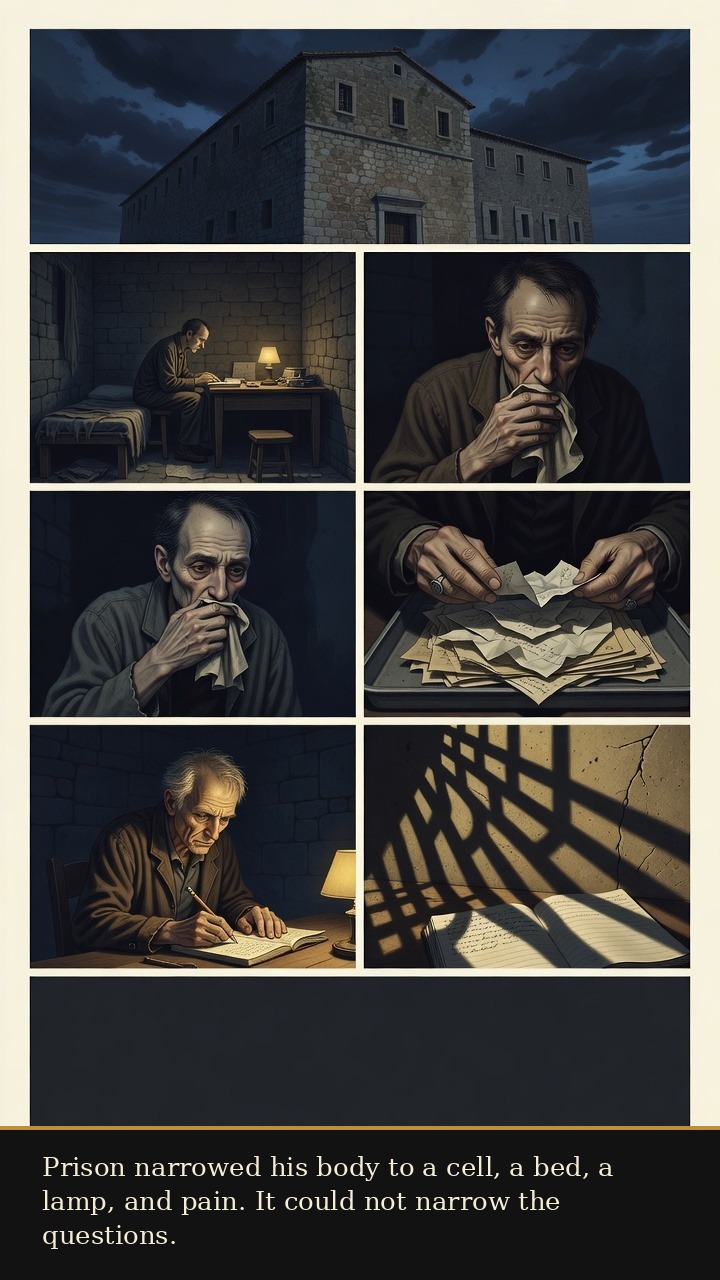
Page 4 of Antonio Francesco Gramsci: Antonio Gramsci: Prison Notebooks - Turi prison narrows the body to a cell, but questions keep expanding under the lamp.
Turi prison narrows the body to a cell, but questions keep expanding under the lamp.
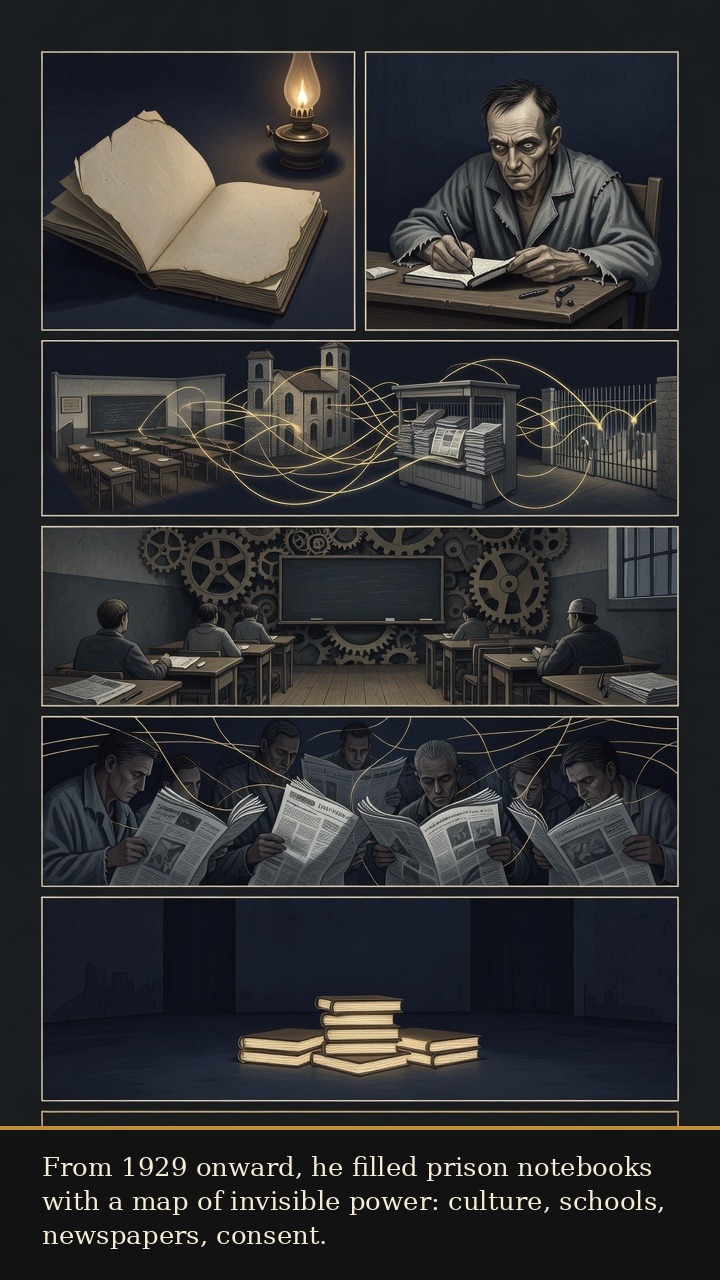
Page 5 of Antonio Francesco Gramsci: Antonio Gramsci: Prison Notebooks - From 1929 onward, the Prison Notebooks turn confinement into a map of invisible cultural power.
From 1929 onward, the Prison Notebooks turn confinement into a map of invisible cultural power.
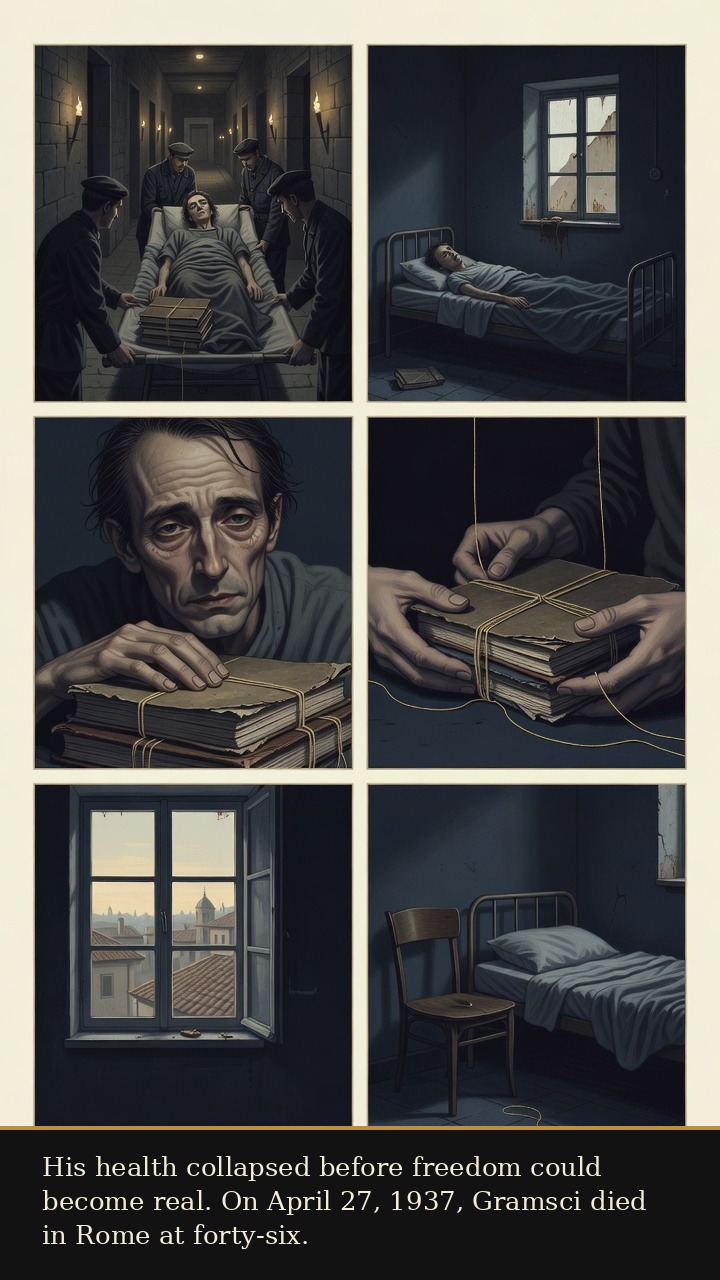
Page 6 of Antonio Francesco Gramsci: Antonio Gramsci: Prison Notebooks - His health collapses before freedom becomes real, and he dies in Rome on April 27, 1937.
His health collapses before freedom becomes real, and he dies in Rome on April 27, 1937.
Page 7 of Antonio Francesco Gramsci: Antonio Gramsci: Prison Notebooks - The notebooks are published after his death; the cell loses and the vocabulary escapes.
The notebooks are published after his death; the cell loses and the vocabulary escapes.