

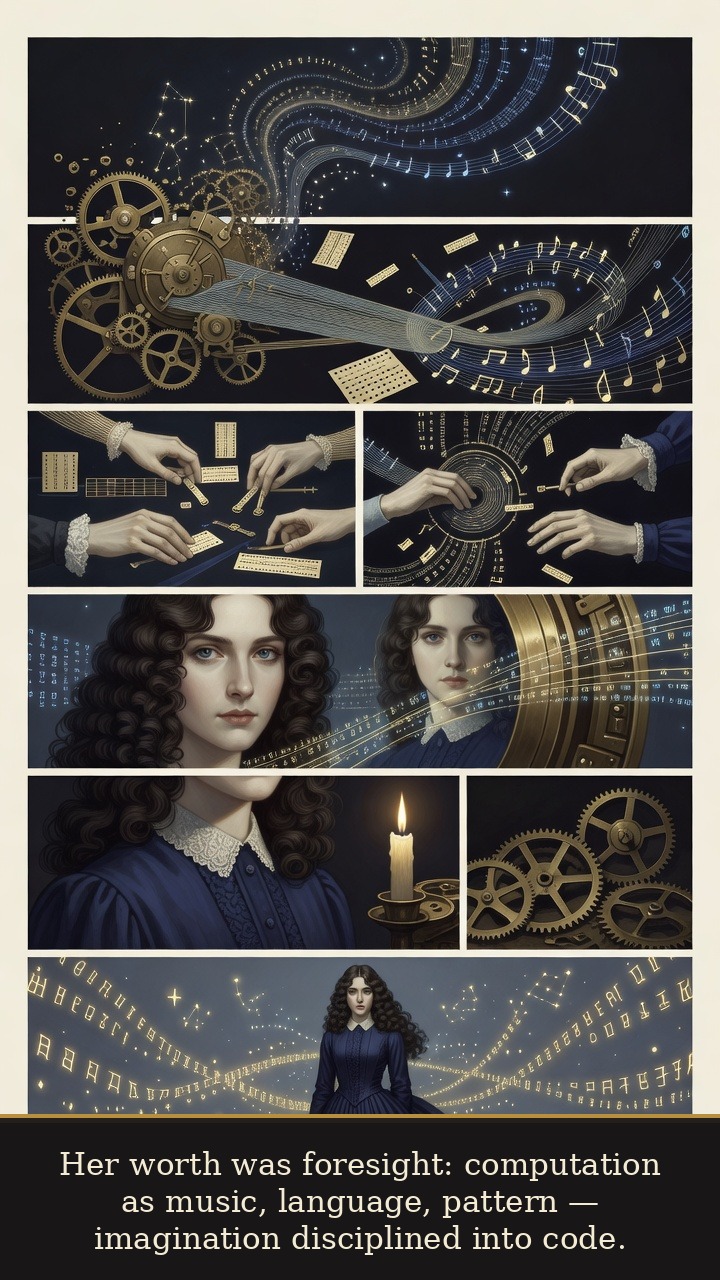
Who was Ada Lovelace, and what is this comic about?

Encyclopaedia Britannica identifies Ada Lovelace (1815–1852) as an English mathematician who collaborated with Charles Babbage and published a program for his Analytical Engine in 1843; it also records that she died of uterine cancer at thirty-six. The Computer History Museum explains that her annotated translation of Luigi Menabrea’s paper included the first published stepwise sequence of operations for solving mathematical problems, while noting scholarly debate about the extent and originality of her contribution. More consequentially, Lovelace wrote that the Engine could operate on things besides numbers, including music, anticipating rule-based symbolic computation. The Science Museum Group likewise describes her vision of a general-purpose programmable machine able to manipulate symbols, letters, and musical notes, and records her death from cancer at age thirty-six. Her lasting importance lies in articulating the conceptual shift from a calculating engine to a machine that could process symbols, decades before an electronic computer existed.

Sources
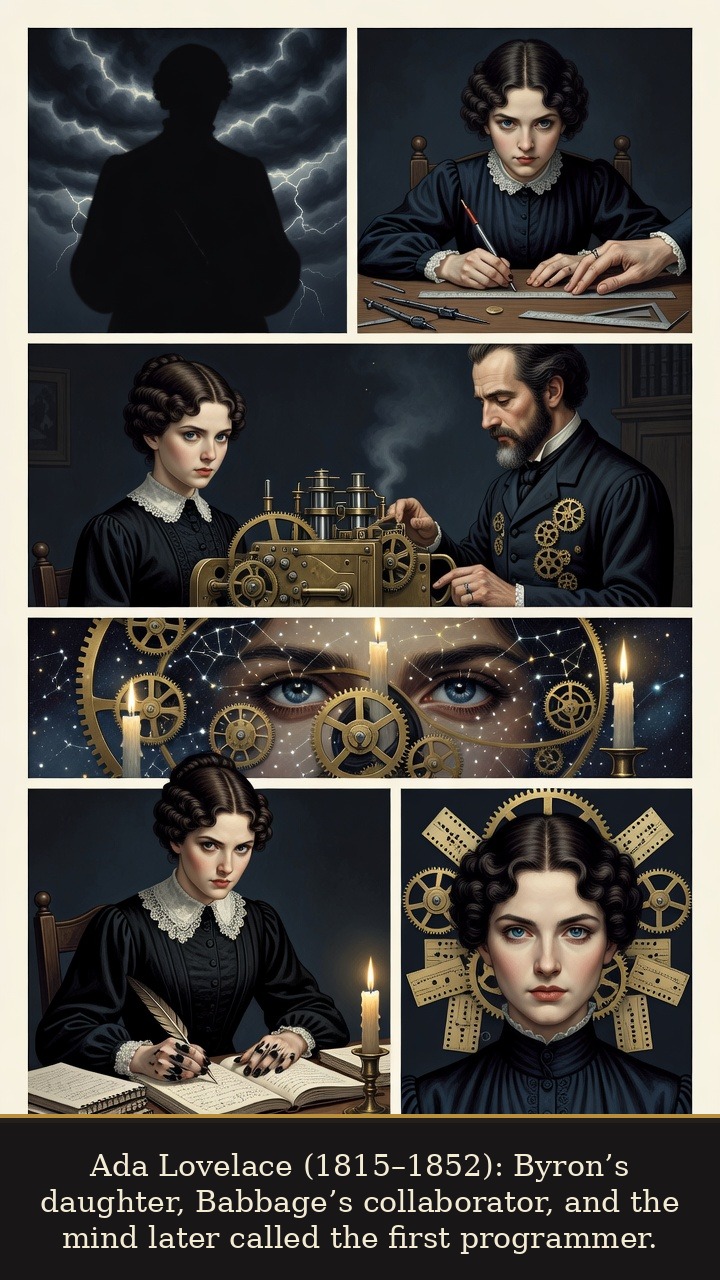
Page 1 of Ada Lovelace: Ada Lovelace: Notes Before Night - Ada Lovelace is identified as Byron’s daughter, Babbage’s collaborator, and a mind later called the first programmer.
Ada Lovelace is identified as Byron’s daughter, Babbage’s collaborator, and a mind later called the first programmer.
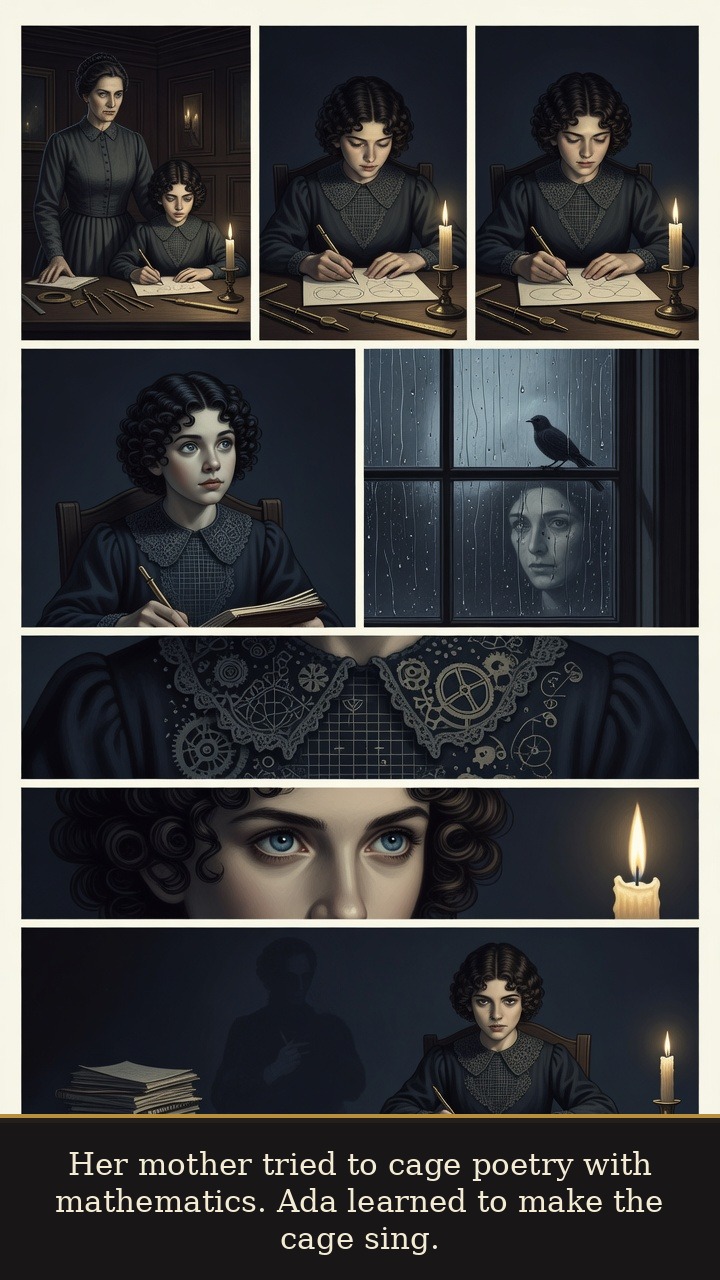
Page 2 of Ada Lovelace: Ada Lovelace: Notes Before Night - Her childhood mathematical discipline becomes a strange instrument for imagination.
Her childhood mathematical discipline becomes a strange instrument for imagination.
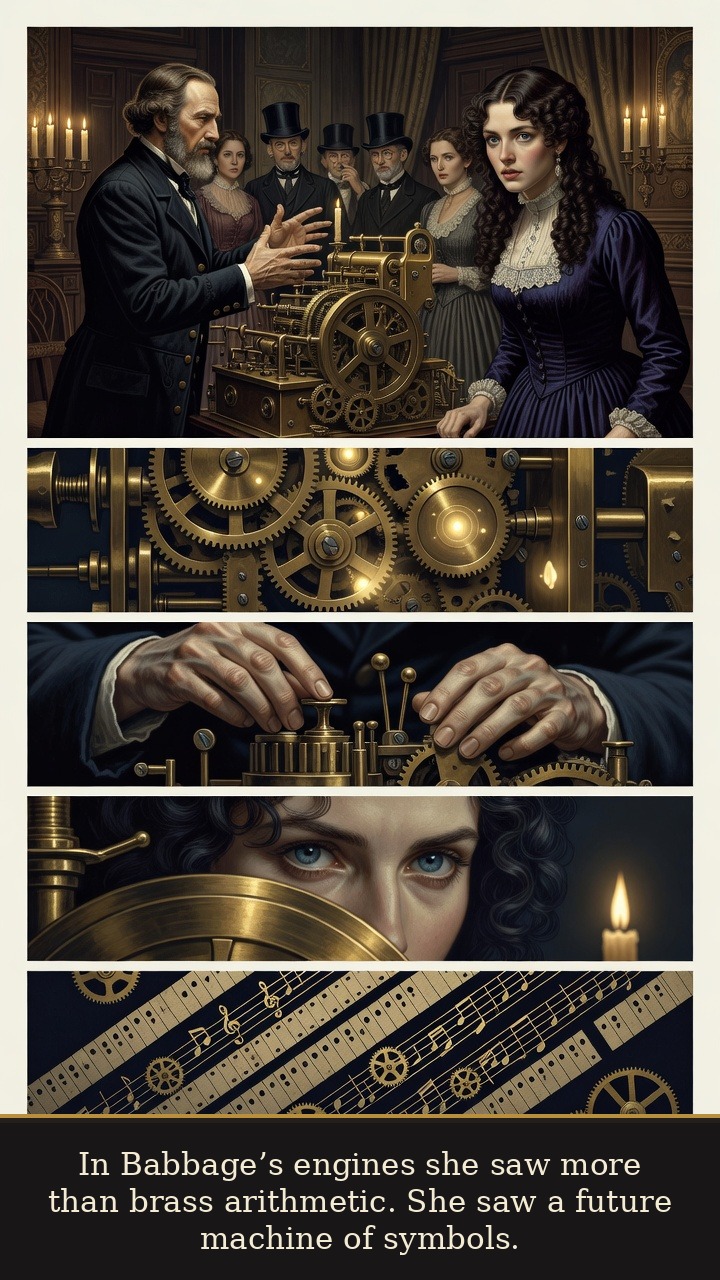
Page 3 of Ada Lovelace: Ada Lovelace: Notes Before Night - Babbage’s engines reveal to Ada the possibility of symbolic machinery beyond calculation.
Babbage’s engines reveal to Ada the possibility of symbolic machinery beyond calculation.
Page 4 of Ada Lovelace: Ada Lovelace: Notes Before Night - Her 1843 notes overtake the translated paper and become the real work.
Her 1843 notes overtake the translated paper and become the real work.
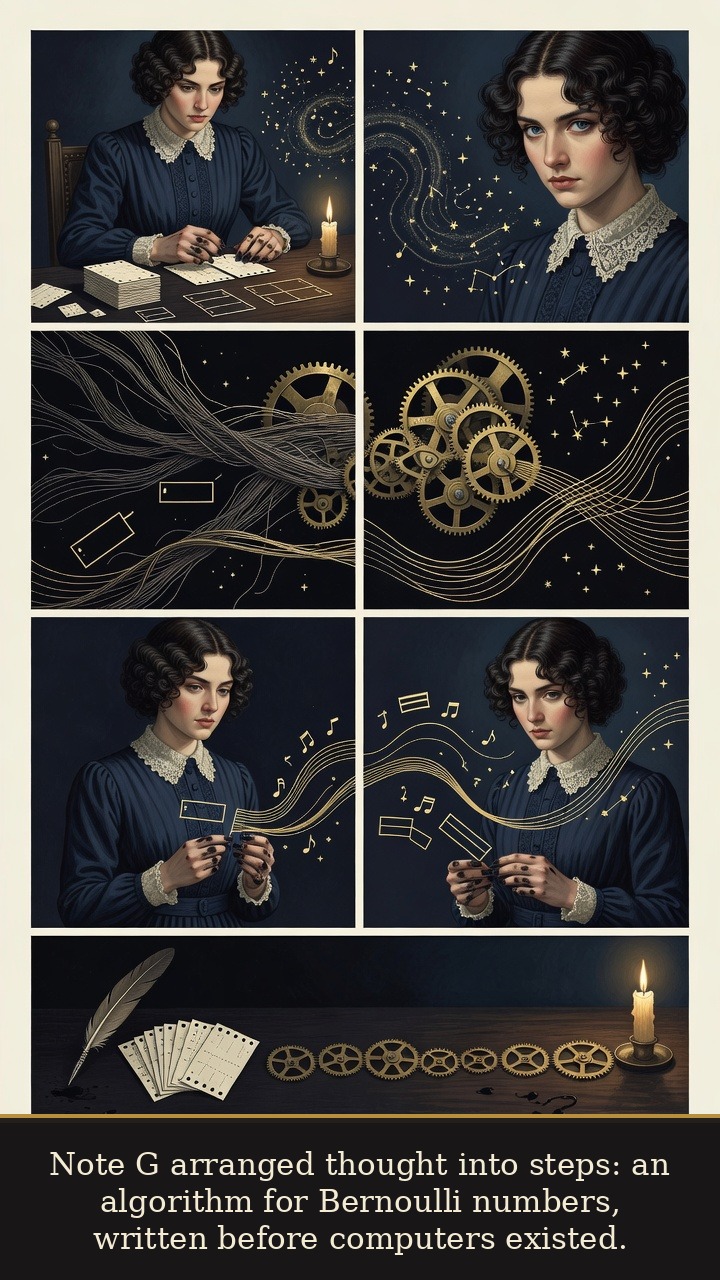
Page 5 of Ada Lovelace: Ada Lovelace: Notes Before Night - Note G frames ordered operations before computers exist.
Note G frames ordered operations before computers exist.
Page 6 of Ada Lovelace: Ada Lovelace: Notes Before Night - Cancer ends her life at thirty-six, while the instructions remain beyond the sickroom.
Cancer ends her life at thirty-six, while the instructions remain beyond the sickroom.
Page 7 of Ada Lovelace: Ada Lovelace: Notes Before Night - Her legacy is computation as music, language, pattern, and disciplined imagination.
Her legacy is computation as music, language, pattern, and disciplined imagination.